Climbing the Municipal Asset-Management Ladder: Bridging the Gap Between Theory and Practice
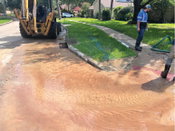
The Sugar Land GIS model (above) flagged this pipe segment as a high-priority location with a predicted failure probability of 0.98. The model proved correct, as a break occurred exactly where forecasted in September 2025, shown here during field response. The Sugar Land GIS model (inset) flagged this pipe segment as a high-priority location with a predicted failure probability of 0.98. The model proved correct, as a break occurred exactly where forecasted in September 2025, shown here during fi...
A New Day for the Sanibel Causeway
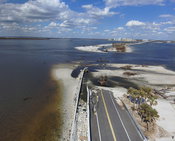
(Superior Construction) (Kisinger Campo & Associates) Hurricane Ian’s damage was catastrophic, but engineers and contractors worked together to rebuild and reconstruct the Sanibel Causeway in Lee County, Fla. On Sept. 28, 2022, Hurricane Ian cut off the Sanibel Causeway, the only vehicular transportation link between Florida’s Gulf Coast and Sanibel and Captiva barrier islands, home to 6,500 residents. Within 24 hours, Superior Construction and The de Moya Group formed a joint-venture team that...

Future Forward Powered by ACEC: It’s Time for Firms to Get Smart on Data
When we talk about “smart engineering,” it’s easy to focus on all the recent advances in technology. At its core, however, smart engineering is about data. While new technologies allow us to analyze and collect more data than ever before, it’s imperative that we use such data to make decisions about infrastructure that maximize the value to society. Using data for infrastructure decision making has been my soapbox for some time (see iimag.link/UtKYw). With limited resources, data allow us to mak...

Change Leader: GIS and Digital Twins Change How a Massive Airport Manages Its Assets
Adan Banda and Brandon Mann This interview was recorded by Todd Danielson, the editorial director of Informed Infrastructure. You can listen to the full interview by visiting iimag.link/DBTFe. Adan Banda is senior geospatial data manager at DFW Airport; Brandon Mann is geospatial analyst at DFW Airport. Dallas-Fort Worth International Airport (DFW) operates as its own municipality—complete with its own ZIP Code; fire, police and SWAT teams; utilities and road networks; even cemeteries—making it...

Infrastructure Outlook: Rethinking Infrastructure for Long-Term Performance
Infrastructure is at a turning point. Governments, cities and private developers are dealing with increasing pressure on aging systems, making them rethink how success is defined. Speed and cost control during construction still matter, but they can no longer be the only measures guiding infrastructure decisions. Instead, the industry is putting more emphasis on durability, long-term performance and overall resilience so construction projects can serve communities well into the future. Two big t...

Executive Corner: The A/E Private-Equity Phenomenon: Where It Stands, and What’s Next?
Back in 2021, I authored a column titled “How Private Equity Is Quietly Transforming the A/E Industry.” My goal back then was to describe and justify the factors driving outside investor interest in our sector and why so many design leaders initially seemed receptive to it. The marriages seemed a bit unconventional. Cerebral, creative and technical architects and engineers joining forces with financiers and dealmakers. And while other executives viewed this with a mix of curiosity and skepticism...

Thoughts From Engineers: A New Era of ‘Big Data’
For decades, engineers have relied on a patchwork of data—field surveys, orthophotos and other sources—to piece together baseline topographic information for infrastructure design and related work. The U.S. Geological Survey (USGS) has long recognized that consistent 3D elevation data for the entire United States would bring major economic and practical value to local, state and federal initiatives. Now, in 2026, after roughly eight years of targeted collection through state and local partnershi...

Transportation Troubleshooting: Engineering the World’s First Floating-Bridge Light-Rail System
Some transportation challenges are measured not in miles, but in constraints. Crossing Lake Washington meant working with a structure that responds to its environment rather than resisting it. When the Link 2 Line opened on March 28, 2026, riders experienced something no transit system had ever delivered before: light-rail vehicles traveling across a floating bridge. For passengers, the trip feels routine. For those of us who worked on the project, it represents years of careful engineering, tes...

Engineering The Future: Building Water Resilience Will Demand Solutions as Diverse as the Risks Themselves
Water is life. And today, there seems to be either too much or not enough of it, depending on where you are and sometimes even both within a short period of time. On March 24, 2026, “World Water Day,” United for Infrastructure hosted an incredible event called “State of The Water Sector 2026: A Dialogue on Emerging Trends in U.S. Water Policy” at the Reservoir Center in Washington, D.C. I was honored to give the opening remarks for a daylong forum on where we are and where we’re going. Some of M...

From the Editor: Contrasting ‘Smart’ with ‘Not-So-Smart’ Engineering
Informed Infrastructure has been publishing a “Smart Engineering” issue in May for several years. There have been columns and articles about a wide variety of projects, procedures and policies about smart engineering. Each year, I struggle a bit with this column—not because I don’t think it’s important, but because I’m not confident in my knowledge of the subject. I can still remember in my early career when we started designing “smart” traffic signals with sensors in the pavement and cameras de...
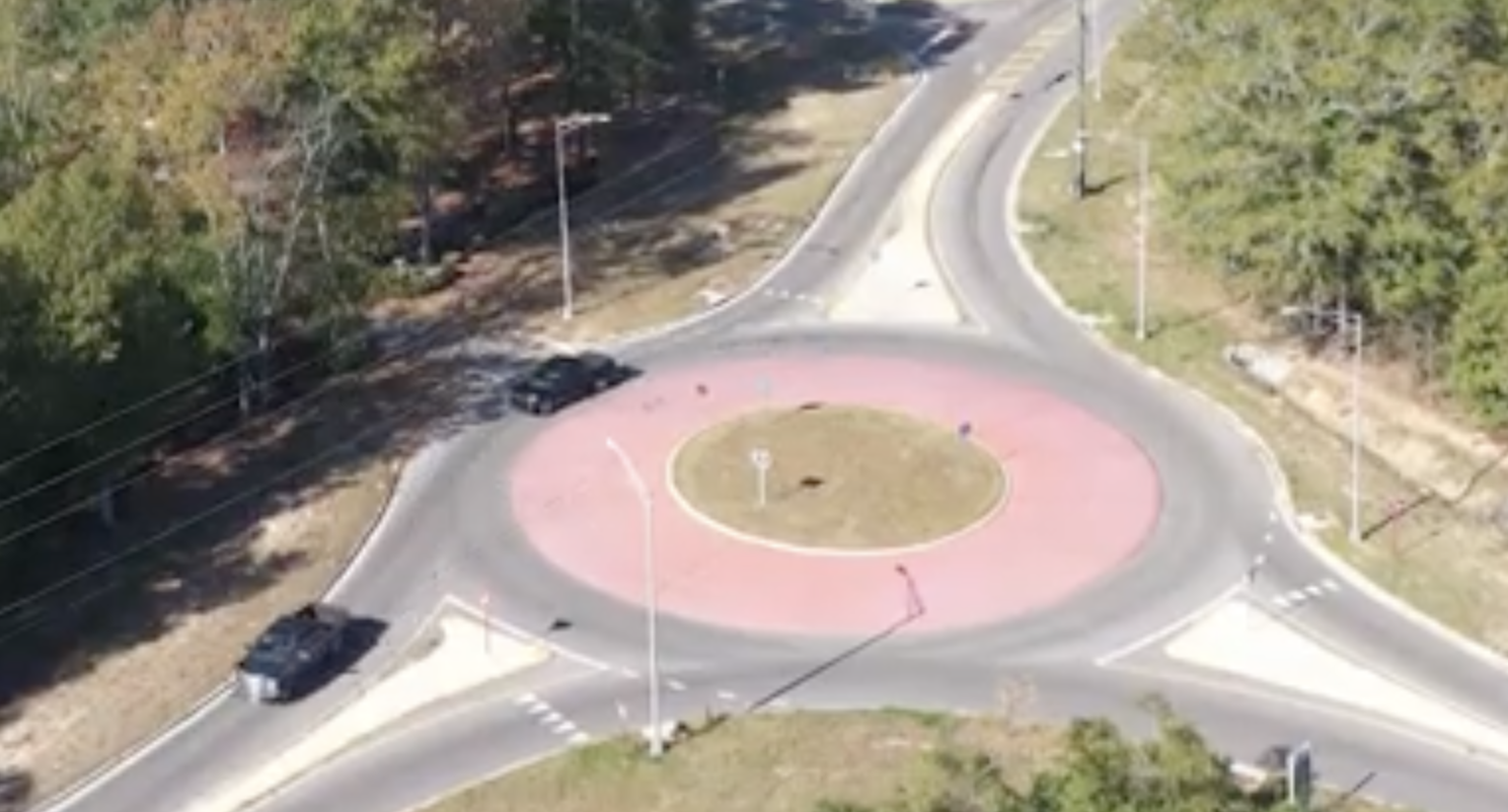
Video: New Roundabout Under Construction at McIver and Old Florence Roads in Darlington County
Promenade at The Point

June Issue 2026
.jpg?width=225)