
Future Forward (Powered by ACEC): Artificial Intelligence and the Firm of the Future
Every industry has a moment when the ground shifts beneath it before anyone has a chance to update the org chart. For the engineering industry, that moment is now, and the cause isn’t one single technological breakthrough, but something more fundamental: the logic that governs how engineering firms create value is being rewritten. That’s the theory of the case laid out in the ACEC Research Institute’s recently released study by futurist Mike Walsh, “Redefining the Firm: Talent, Technology, and T...

Water Works: Urban Karst: Stormwater’s Invisible Infrastructure
Early in my career in stormwater management, I designed storm sewer networks as isolated infrastructure—after all, MS4 is an abbreviation for Municipal Separate Storm Sewer System. Since then, I’ve gained enough experience to challenge that notion, particularly when it comes to green stormwater infrastructure (GSI). I don’t think I’m alone, so let me explain. GSI inherently elevates principles of interconnectedness by recognizing that stormwater isn’t simply an isolated engineering problem, but...
.jpg?width=175)
Infrastructure Outlook: Water Utilities Must Move From Optimization to Orchestration
The U.S. water sector has built its success on a steady playbook: plan long, invest steadily and optimize assets through time—but that playbook is showing its limits. Conditions are changing faster than the system was designed to absorb, and utilities are feeling it in every part of their operation. The findings in the survey-driven “Black & Veatch 2026 Water Report” (www.bv.com/en-US/resources/water-report) show a sector that’s adapting, investing and innovating in real time. They also point to...

Executive Corner: Navigating the Talent Gap: How M&A and Corporate Restructuring Are Shaping the Future of the A/E Industry
Our practice of conducting business valuations for firms in the A/E industry provides a unique perspective on emerging trends as they unfold. With a diverse array of firms seeking valuations for various purposes—ranging from mergers and acquisitions (M&A) to succession planning and financial assessments—these evaluations offer valuable insights into the dynamics shaping the industry landscape. One challenge we’ve observed is that the A/E industry is grappling with a significant shortage of mid-c...

Thoughts From Engineers: Locating Wetlands for Better Planning
Geospatial data, high-resolution terrain models and machine learning are creating new ways to understand what’s happening on the ground. These technologies already are influencing fields such as traffic management, agricultural production, infrastructure maintenance, watershed planning and environmental protection. One especially useful example is the Wetland Intrinsic Potential (WIP) tool, developed by researchers at the University of Washington in Seattle. WIP uses multivariable datasets, lida...

Transportation Troubleshooting: Standing at the Edge of the IIJA Funding Cliff
With the Infrastructure Investment and Jobs Act (IIJA) set to expire Oct. 1, 2026, the transportation industry is approaching a pivotal moment that will shape project pipelines, workforce planning and long-term infrastructure investment across the country. The IIJA is the latest in a series of federal transportation laws that provide funding and set policy for highways, transit and other critical infrastructure. These legislative packages, commonly referred to as “Surface Transportation Reauthor...

Engineering The Future: Cities of the Future: Where Resilience and Functional Recovery Matter
Imagine you’re a house owner in need of a new roof. One option will last 10 years; the other 30. Both jobs require the same labor, but the more-durable solution has a 5 percent premium for higher-quality design and materials. Nearly everyone would choose the 30-year roof. It’s easy to see that the cheaper upfront option isn’t fiscal prudence—it’s a decision to pay more through time on repair, maintenance and potentially a replacement. Yet cities have effectively been opting for the cheap roof fo...

From The Editor: Musings on Another Severe Summer and Infrastructure Events
First, I and Informed Infrastructure would like to congratulate fellow columnist Maria Lehman, a widely recognized infrastructure leader who was named ACEC New York Engineer of the Year. (Learn more about the award at iimag.link/gRpjZ.) Summer Slow Down I’m enjoying the summer so far by driving through construction zones on highways; slowing down for farm machinery; enduring minor power outages due to overloads; cleaning up the loss of a large tree in our front yard felled by a severe storm; and...

The Intelligent Landscape: How AI Is Broadening the Reach of Geospatial Intelligence
By Dan Gruidel Geospatial data has never been more abundant or more essential. From climate resilience and emergency response to infrastructure planning and utility management, organizations depend on geospatial intelligence to make informed decisions. Yet, most geospatial work has been the domain of specialists: remote‑sensing analysts, photogrammetrists, lidar technicians and cartographers. These roles required years of training and deep technical mastery. The tools were powerful, but the barr...

Regulations, Treatment Options and Potential Carbon Shortages: Everything You Need to Know About PFAS in Drinking Water
Per- and polyfluoroalkyl substances (PFAS) have been the headline-grabbing “contaminant of the moment” across the water sector, driving a remarkable wave of regulation, litigation and treatment innovation. Their persistence, mobility and resistance to degradation have led to widespread presence in soil, water and even human bloodstreams, where they are correlated with the increased risk of some cancers, suppressed immunity, developmental delays in children, decreased fertility and high blood pre...
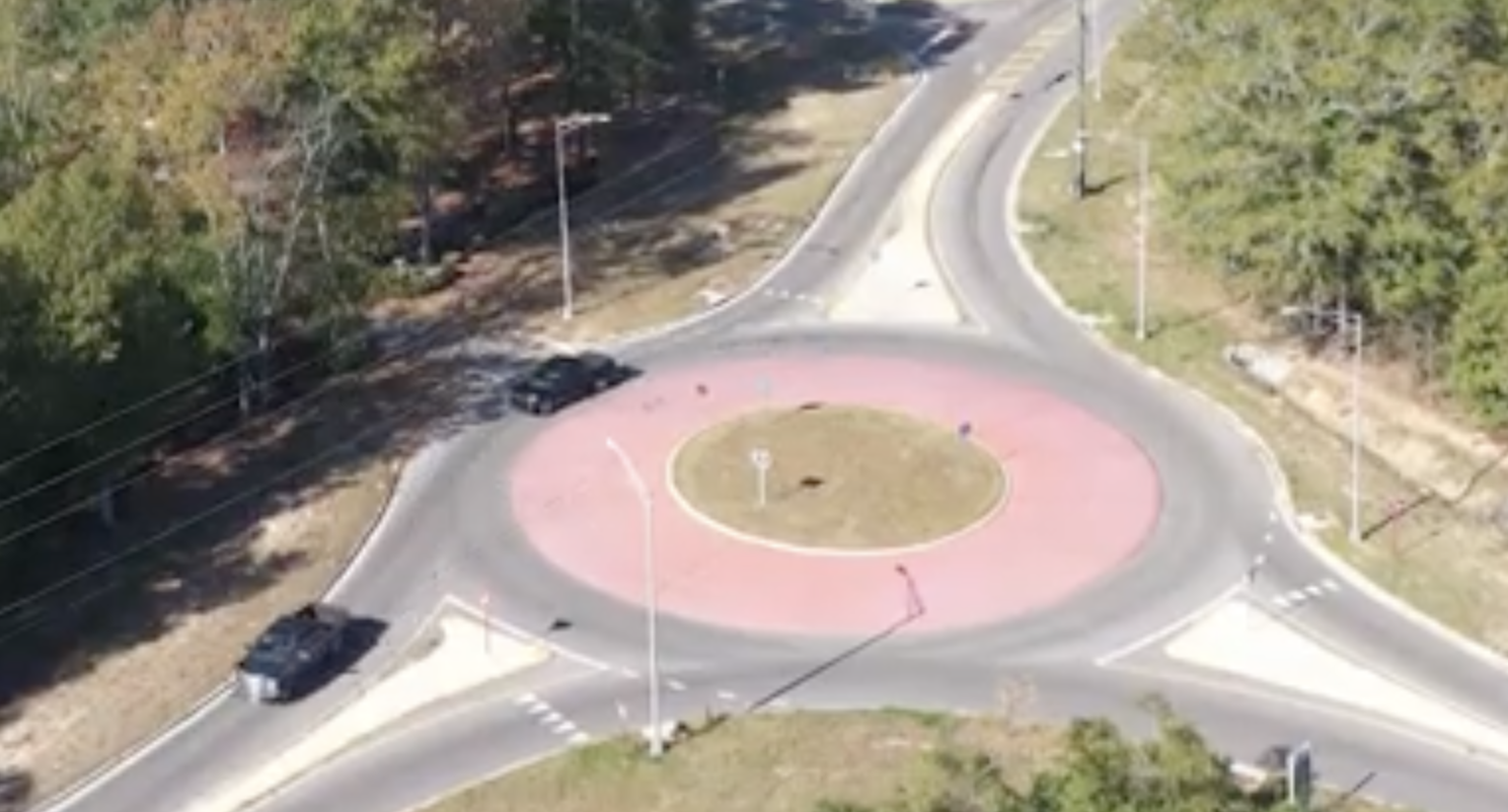
Video: New Roundabout Under Construction at McIver and Old Florence Roads in Darlington County
Promenade at The Point

June Issue 2026
.jpg?width=225)