
Imagine you’re a house owner in need of a new roof. One option will last 10 years; the other 30. Both jobs require the same labor, but the more-durable solution has a 5 percent premium for higher-quality design and materials.
Nearly everyone would choose the 30-year roof. It’s easy to see that the cheaper upfront option isn’t fiscal prudence—it’s a decision to pay more through time on repair, maintenance and potentially a replacement.
Yet cities have effectively been opting for the cheap roof for decades. Urban planners and political leaders tend to fixate on the upfront capital cost of new infrastructure—understandable given their fiscal restraints and the short political calendar. But it’s a false economy; the only rational cost to focus on is the entire infrastructure lifecycle.
Climate Stress
As cities globally come under increasing climate stress, the costs of that approach are growing and risk becoming unsustainable.
More than 800 million people living in 570 cities could be at risk from sea-level rise by 2050 if emissions continue on their current trajectory. In the United States, climate disasters have cost the economy $6.6 trillion during the last 12 years. Yet funding for climate resilience is falling far short of what’s required. Some 124 U.S. cities reported seeking $40.8 billion in climate-resilience funding in 2024, against an overall investment need of $62.7 billion.
The need for a different approach is clear: policymakers need to prioritize durability and cost-effectiveness across the whole lifecycle and treat infrastructure as a system rather than a series of disconnected ribbon-cutting events.
Systems thinking looks beyond individual assets to understand infrastructure as an interconnected system: social, environmental and technical. Mapping interdependencies, feedback loops and cascading impacts strengthens climate-risk assessments, informs better adaptation choices and supports resilient investment decisions that avoid unintended consequences.
Financial Forces Aligning Behind Resilience
The positive news is that financial forces are increasingly aligning with the more-rational approach, making the smart choice also the more-economical choice. This provides a stronger impetus for resilient infrastructure than any policy or climate argument.
In the United States, rising insurance premiums on homes in vulnerable areas and doubts over the future of FEMA are weakening the safety net that have allowed developers and cities to externalize climate risk. As that risk gets repriced, it will be reflected in lower interest rates for truly resilient infrastructure, helping offset the higher upfront cost.
The municipal bond market, which funds the majority of U.S. public infrastructure, is increasingly rewarding a long-term lifecycle approach. The average maturity of U.S. municipal bond issuance has lengthened from 16 years a decade ago to 20 years today, according to Securities Industry and Financial Markets Association data, extending the horizon over which investors must consider operational and maintenance performance. Much longer durations are becoming common. New York’s Mario Cuomo bridge now is financed with bonds running through 2056. Chicago’s City Council in early 2025 approved an $830 million bond issue with a 40-year repayment schedule to fund road, bridge and other infrastructure projects.
What Resilience Looks Like
The financial case for durable infrastructure has always been there. Every $1 invested in resilience saves $13 in economic impact, damage and cleanup costs after a disaster event, found a 2024 report produced by the U.S. Chamber of Commerce.
New Orleans provides a powerful example. After Hurricane Katrina, the Army Corps of Engineers rebuilt the city’s levees to a 100-year storm standard — a major upgrade from pre-Katrina standards, though still short of the 500-year standard that many engineers and state officials believe is necessary. When Category 4 Hurricane Ida struck in 2021, the levees protecting New Orleans held, even as some unprotected suburbs outside the system flooded. Ida’s death toll across the entire state was two.
Financial realities mean that not every infrastructure project needs to be built to the maximum standard. Spending can be calibrated to the scale of risk and designed to enable cities to withstand and recover from extreme events rather than emerge completely unscathed. Applying this “functional recovery” standard in practice, a city could aim to keep two lanes of a highway open during a flood rather than all four or prioritize a dam that protects a nuclear power plant over one that protects a sparsely populated area. Reasonable resilience goals could be no deaths, continued commerce and to allow recovery to begin.
Thinking in Systems, Not Projects
Cities leading the way on resilient infrastructure have one thing in common: they think in systems rather than one-off projects. Their infrastructure choices reinforce one another, targeting a “triple bottom line” of economic, social and environmental returns.
Amsterdam learned to adapt its water management through centuries. Rather than just fighting rising water, it has found ways to live with it and use it to support broader resilience goals. The nutrient-rich silts deposited by managed flooding have given the Netherlands some of Europe’s most-productive farmland, while windmills that began as pumping mechanisms have evolved into a renewable energy source. Amsterdam’s latest use of its canal system for transport consists of a fleet of autonomous electric water taxis, contributing to the city’s target of being a fully circular economy by 2030.
Singapore treats its infrastructure as a single, integrated system, mandating that every new building contribute to, rather than simply draw from, the city-state’s resources. Wastewater is recycled into buildings, which increasingly have green walls and roofs. Some 80 percent of its buildings are on course to be “greened” (meeting minimum energy standards) by 2030.
Singapore’s unified approach to resilience underscores the importance of coordination frameworks for implementing plans across regional and political boundaries. Climate effects don’t stop at city or county limits.
That’s a real barrier to effective resilience in more politically contentious societies such as the United States. Southern Florida, among the most vulnerable regions to rising sea levels, has shown the value of a bipartisan approach. Politically diverse counties, including Miami-Dade, Monroe and Palm Beach, have been coordinating since 2009 to reduce regional greenhouse gas emissions, implement adaptation strategies and build climate resilience.
A Hopeful Moment
Despite the growing climate threats to aging infrastructure, I believe we’re at a hopeful moment. The financial calculus is changing in a way that makes the fallacy of “saving money” on less-resilient projects clearer than ever.
Meanwhile, the growing real-world effects of our changing climate will make it increasingly costly to pursue any infrastructure approach other than a unified, systemic one.
More than ever, infrastructure has to be durable, cost-effective and efficient. It’s time for leaders to stop evaluating projects purely by sticker price and instead mandate lifecycle cost analyses that provide a true picture of their value.
Editor’s Note: We would like to congratulate Maria Lehman for recently being named 2026 Engineer of the Year by ACEC New York. Learn more about the award at iimag.link/gRpjZ.

Maria Lehman
Lehman, P.E., NAE, NAC, F.ASCE, ENV SP, is executive advisor for U.S. Infrastructure at GHD. She is the current interim executive director and past president of the ASCE and currently serves as a member of the National Infrastructure Advisory Council. She also is the Samuel P. Capen professor of engineer management at the State University of New York at Buffalo; email: [email protected].
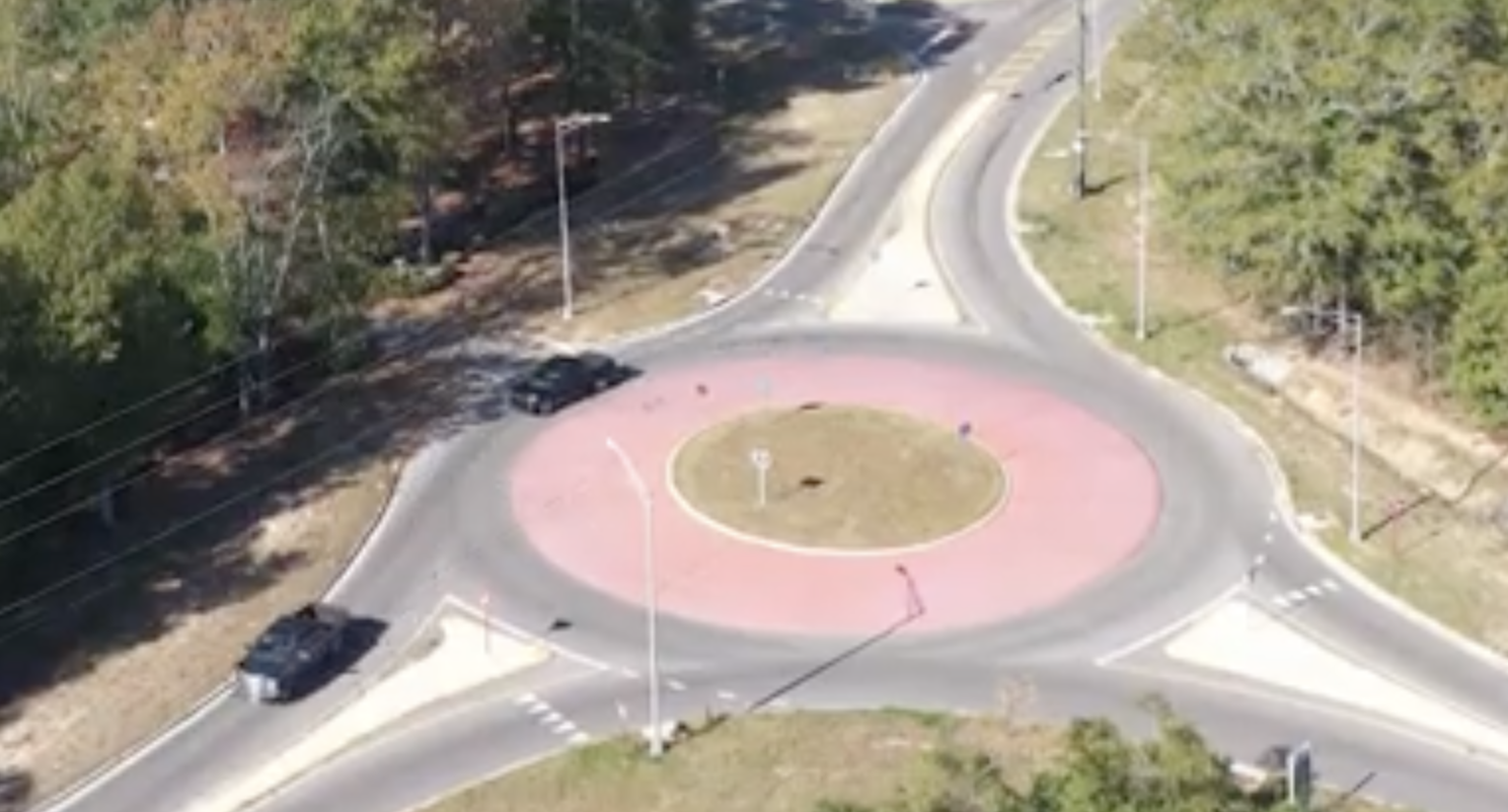
Video: New Roundabout Under Construction at McIver and Old Florence Roads in Darlington County
Promenade at The Point

June Issue 2026
.jpg?width=225)