
Engineering The Future: Does Civil Engineering Have the Courage to Change (Redux)?
We’re being bombarded daily with AI bots and news. Everyone in the profession sees it as a blessing and a curse. I see it as similar to the revolution we saw in the 1980s and 1990s when an engineering office went from large drafting rooms to computer-aided drafting (CAD) first and then computer-aided design and drafting (CADD). Drafters wore visors and had a large fluorescent light over their large wooden or aluminum drafting table. Drawings were ink on mylar with letters that used a rapidiog...

From the Editor: Hoping Engineers Can Help Right the Ship
The (now 5th) annual Informed Infrastructure Sustainable Engineering Issue includes various articles and columns that highlight sustainable engineering through projects and commentary. As engineers, we continue to explore, conceptualize, develop and implement sustainability into standards, procedures and policies as well as our projects. Leading Universities A recent headline caught my attention: “Purdue University launches School of Sustainability Engineering and Environmental Engineering...

Transportation Troubleshooting: Optimizing Infrastructure Value Using Modern Asset-Management Tools
During my tenure as Washington State Department of Transportation (DOT) Secretary, we lacked advanced tools to maintain a precise inventory of our vast and diverse assets. It was a labor-intensive struggle to accurately account for assets we owned and managed—as well as their condition—right down to our guardrails, sign structures and culverts. We were not alone, as most DOTs experienced this pain in their daily operations. Fortunately, modern asset-management approaches are revolutionizin...

Thoughts From Engineers: Global Work Group Takes Aim at Flood Science
The disastrous flood events in several world regions within the last several weeks, from the Hill Country of Texas to northern China, underline the particularly damaging and deadly flood events we now encounter routinely. Communities worldwide are working to get ahead, fortify and redesign infrastructure, and adapt. From cities such as Copenhagen, Denmark, that have redesigned urban areas to accommodate flooding to countries such as Japan enabling vast IoT-enabled flood data reporting networks f...

Executive Corner: Strategizing for Potential Changes to DBE/MBE Programs
Recent legal challenges have placed Disadvantaged Business Enterprise (DBE) and Minority-owned Business Enterprise (MBE) programs under intense scrutiny. On May 28, 2025, the U.S. Department of Transportation filed a motion in the Mid-America Milling Company v. DOT case asking a judge to block race- and sex-based presumptions in its DBE program—a move that has made the future of set-aside contracting suddenly uncertain. While the legal process unfolds, owners and executives across the architectu...

Water Works: Modern Stormwater Management Requires Looking at All Tools
Green stormwater infrastructure (GSI) is increasingly recognized as a more-sustainable approach to stormwater management vs. traditional or even newer flow-through treatment practices. Definitions vary, but GSI practices often include vegetation and soil designed to infiltrate stormwater runoff onsite, preventing it from running off into receiving waters. Innovative practices—such as proprietary manufactured treatment devices (MTDs)—can be an effective alternative where space is constrained,...

Future Forward (Powered by ACEC): Building Resilience: Climate Catastrophes Call for Engineered Solutions
If you live in or have traveled to certain parts of the country during the first half of 2025, you may have noticed something unusual: urgent and insistent buzzing from your cellphone, signaling a flash-flood warning in your immediate area. And if you’re thinking those warnings are coming with remarkable frequency, you’d be correct. Data recently compiled by Iowa State University noted that between Jan. 1, 2025, and July 15, 2025, the National Weather Service issued 3,040 alerts warning resident...
Engineering the Future: Just Do It!
I remember when Nike launched its “Just Do It” media campaign—it was brilliant! The application to infrastructure was obvious to me. Three words that sum up the need to stop analysis paralysis and get things built. When you look at the masterworks from the past—the lack of electronic tools, yellow iron to build things, complex models to optimize the design, multiple funding sources, etc.—it’s amazing what was built and, in many cases, how quickly it was built. Negative Inertia I believe we...

Future Forward (Powered by ACEC): AI and the Future of Engineering: (Don’t) Rage Against the Machine
Go to any gathering of engineers—whether it’s a professional conference or a happy hour—and you’re almost guaranteed to hear a discussion about AI and how much it’s going to change our industry. (Notice I said “going to” change as opposed to “could” change.) A recent study by the ACEC Research Institute, “The Role of Artificial Intelligence in the Engineering Industry” (visit iimag.link/HLPrk), supports and quantifies the anecdotal evidence that AI already is playing a huge role in what engineer...

Change Leader: Stormwater Research to Raise Its Profile, Encourage Collaboration
Brian King Chris Stoneburg This interview was recorded by Todd Danielson, the editorial director of Informed Infrastructure. You can watch a video of the full interview above or by visiting iimag.link/NsfbK . Brian King is the executive vice president of product management, marketing and sustainability for Advanced Drainage Systems (ADS). Chris Stoneburg is the director of product development, ADS. Changing Perceptions When Advanced Drainage Systems, I...
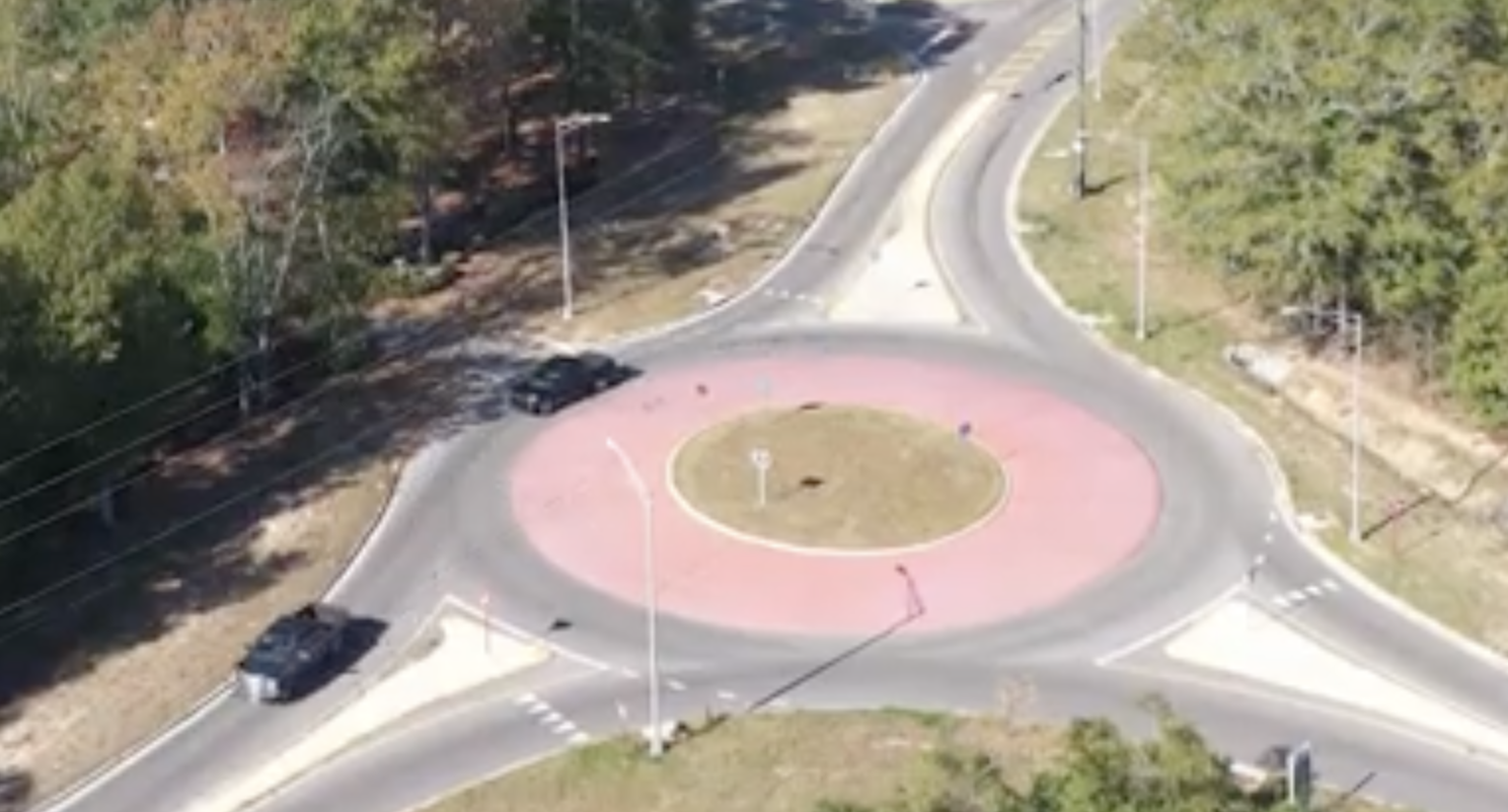
Video: New Roundabout Under Construction at McIver and Old Florence Roads in Darlington County
Promenade at The Point

June Issue 2026
.jpg?width=225)