
With the Infrastructure Investment and Jobs Act (IIJA) set to expire Oct. 1, 2026, the transportation industry is approaching a pivotal moment that will shape project pipelines, workforce planning and long-term infrastructure investment across the country.
The IIJA is the latest in a series of federal transportation laws that provide funding and set policy for highways, transit and other critical infrastructure. These legislative packages, commonly referred to as “Surface Transportation Reauthorization,” typically operate on five-year cycles and require periodic reauthorization upon their expiration.
Much of the nation’s transportation system traces back decades and is increasingly in need of modernization, making sustained and predictable investment essential to keeping it safe, reliable and relevant.
As expiration approaches, transportation leaders are asking a critical question: how do we maintain momentum if the legislation expires without a clear path forward?
Where We’re At
Nearly five years in, the IIJA has reshaped the scale and predictability of transportation investment in the United States, giving states, cities and communities the confidence to move forward with long-planned projects.
“There’s been real market growth over the last four-and-a-half years under the IIJA, despite cost increases and pandemic inflation,” explains Lauren Schapker, vice president, American Road and Transportation Builders Association. “Around 120,000 highway and bridge projects have received support, and states have already obligated approximately $270 billion.”
This level of activity reflects strong alignment across the project delivery ecosystem, enabling owners, designers and builders to take on more-complex work.
Attention is now shifting to what comes next. Projects without secured funding are most vulnerable, especially if uncertainty delays decisions and new commitments.
Where We’ve Been
Federal transportation programs have long operated in cycles, with periods of strong investment followed by unpredictability during reauthorization.
“There are really only two options when a bill approaches expiration: a new reauthorization or an extension of the current law,” says Schapker. “History shows us that extensions are common.”
In fact, every reauthorization since 2005 required short-term extensions before a permanent bill was enacted.
Extensions can provide continuity, but they rarely offer the clarity needed for long-term planning. Agencies may hesitate to advance large or complex projects without funding certainty, and private-sector partners often adjust hiring and investment decisions accordingly.
The result is what many in the industry describe as a funding cliff—it’s less an immediate halt than a gradual tightening of risk tolerance across the system. Projects in early stages are deferred, timelines stretch and costs can rise as uncertainty works its way through the pipeline.
A large fiscal dropoff also is expected without advance appropriations, a unique funding mechanism of the IIJA that made money available in future fiscal years without further Congressional action. This mechanism offered greater stability and predictability for infrastructure programs, but it’s not currently being discussed for reauthorization.
Where We’re Going
The encouraging news is that the IIJA has already established a strong foundation for infrastructure improvements. Many of the largest and most-complex projects funded under the law are progressing through delivery and construction with safety and mobility benefits being realized.
“The impacts of the current reauthorization are going to be felt throughout the construction pipeline for the next several years,” adds Schapker. “The mega-projects that are now receiving obligated funding will be under construction for a long time, driving both economic activity and job creation.”
In order to sustain that trajectory, many industry advocates—including the American Association of State Highway and Transportation Officials—are discussing the following key themes they hope to see in future legislation:
• Federal investment stability: While growth is always a goal, simply preserving today’s high funding levels would represent a meaningful win.
• Balancing formula and discretionary funding: Formula programs provide the predictability states require, while discretionary grants enable complex, multi-state and regionally significant projects to move forward.
• Strengthening the delivery pipeline: Improving project delivery timelines through measures such as expanded National Environmental Policy Act assignment, streamlined processes and better coordination can help ensure that dollars move quickly into construction without compromising environmental safeguards.
• Workforce investment: Meeting current demand while building the next generation of skilled workers will be essential to sustaining industry capacity.
Facing the Funding Cliff Together
There’s been some exciting movement in the House of Representatives with the Transportation and Infrastructure Committee’s BUILD America 250 Act. With this bipartisan recognition to preserve and grow investment levels for core highway and transit programs, there’s a clear foundation to build upon. It’s been a promising step toward reauthorization, but there’s still work to be done in both the House and Senate before we see a comprehensive bill passed.
Continued engagement with policymakers will be critical. Sharing practical insights from project delivery and system performance can help inform the decisions that will shape the next phase of transportation investment.

Paula Hammond
Paula Hammond is senior vice president and national multimodal market leader, WSP in the U.S., and former chair of the American Road and Transportation Builders Association; email: [email protected].
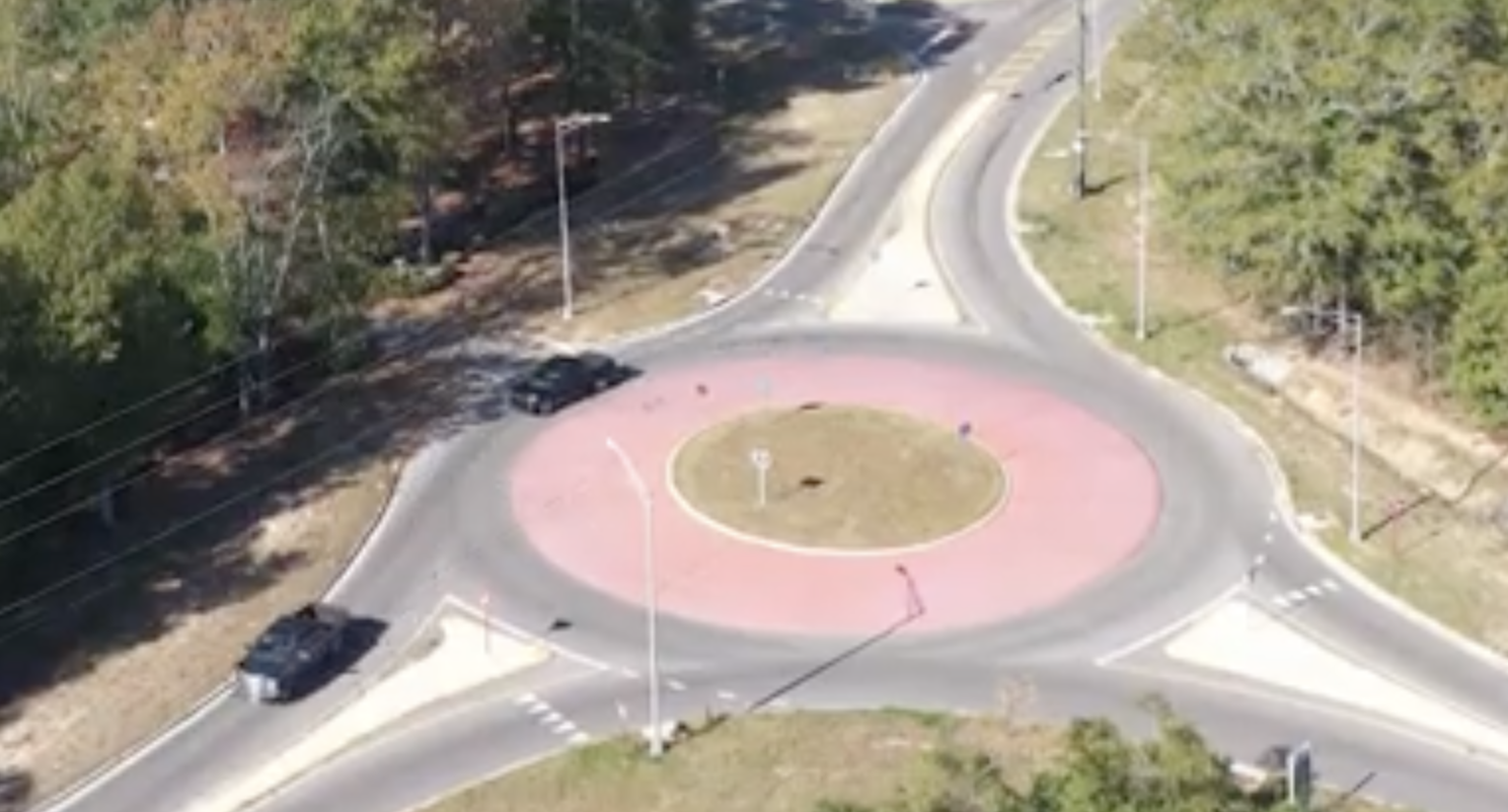
Video: New Roundabout Under Construction at McIver and Old Florence Roads in Darlington County
Promenade at The Point

June Issue 2026
.jpg?width=225)