
Water Works: Go Big! A Case for Regional Stormwater Facilities to Address Existing Development
After what seemed like an eternity, the street redevelopment in front of my beloved downtown coffee shop is finally complete. It’s almost eerily quiet now that the fleet of excavators, dump trucks and compactors has moved on—most people would’ve simply gone elsewhere for their morning caffeine hit while the chaos was in full swing. As a true stormwater nerd, however, I dutifully braved the noise and dust to observe the refurbishment of the storm sewer, including the addition of small-media filte...

Code Update: ACI CODE-318-25: Updates You Need to Know
ANDREW TAYLOR, PHD, S.E., FACI GREG ZEISLER The American Concrete Institute (ACI) recently published the 2025 edition of ACI CODE-318, “Building Code Requirements for Structural Concrete—Code and Commentary.” This latest version includes numerous changes, such as refinement of the one-way shear provisions introduced in ACI CODE-318-19, alignment with other ACI codes (e.g., ACI/PCI CODE-319-25, ACI/PTI CODE-320-25, ACI CODE-440.11-25), coordination with ASCE/SEI 7-22, and improved and clarified c...

Executive Corner: What the Tea Leaves Tell Us About the A/E Industry Outlook
With geopolitical instability, persistently high interest rates, tariffs and rising energy costs, the A/E industry, along with the overall U.S. economy, is certainly facing some significant headwinds. And yet, A/E industry results in 2025 generally were very strong, and year-end backlogs, along with business leaders’ sentiment, seem to point to continued growth in 2026. Poll Results We recently conducted an informal poll of client firms, including participants in our annual “A/E Business Valuati...

Thoughts From Engineers: Synthetic Storms for Flood-Risk Assessment
Important national efforts are underway to better prepare for the elevated flood risk strongly linked to a nonstationary climate. The National Oceanic and Atmospheric Agency, for example, is developing a new Atlas 15 to be better aligned with current and future flood risk. In addition, Stochastic Storm Transposition (SST) has emerged as a tool with the potential to help identify and assess flood risk under extreme conditions. The methodology uses high-resolution gridded radar data of recent stor...

Transportation Troubleshooting: Why Congestion Pricing Works; What Cities Are Learning from It
Many people think of traffic congestion much like the weather: something that can be predicted but not controlled. Yet, the first full year of congestion pricing in lower Manhattan demonstrated that gridlock isn't a force of nature but a manageable challenge when the right tools and policies are applied. Mobility Matters Congestion is the predictable result of many factors, ranging from road design and carpool culture to the availability, efficiency, price and safety of mass transit. City and re...

Engineering The Future: Engineering What’s Next: Alternative Fuel Vehicle Adoption
Anticipating the future and its opportunities is becoming more critical than ever, as opposed to reacting to past events. One of my favorite quotes attributed to Wayne Gretzky is “I skate to where the puck is going to be, not where it has been.” The speed of change continues, and it’s dizzying. Full Systems Approach I had the privilege to co-organize a daylong workshop at the State University of New York at Buffalo, School of Engineering, on freight operations and the challenges and opportunitie...

From The Editor: Engineering Can Be Exciting!
Sometimes it’s difficult to define the things that interest you—or, more specifically, what excites you. Early Major Project I’ve been traveling on U.S. 31 between U.S. 30 and Indianapolis for years. A long while back, I designed part of the first bypass of Kokomo, Ind., when I was working with the Indiana Department of Highways. At that time, it was one of the largest projects I had worked on; it was exciting. The corridor selected was fairly open, so the choice of alignment was only limited by...

Grand Forks Hybrid Water Treatment Plant Positively Impacts Community
The 250,000-square-foot Grand Forks Regional Water Treatment Plant features an optimized control room and panoramic view of the major water-treatment areas. The unique design includes sustainable innovation, amenities to foster employee wellness within a 24/7/365 environment, resource stewardship and brighter standards in industrial park design. After six years of planning and construction, Grand Forks, N.D., began operation of the Grand Forks Regional Water Treatment Plant (GFRWTP) in mid-2020....
A Brief History of the Wide Flange Beam
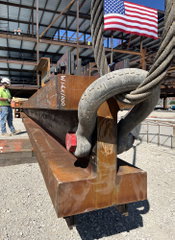
A photo from 1911 at the Differdange Mill in Luxembourg, celebrating the accomplishment of producing the first rolled beam in the world with a depth of 1 meter. On July 1, 2025, a massive crane erected the world’s first W14x1000 steel column on the construction site of the Henry Ford Hospital in Detroit. As the heaviest rolled shape on earth, the column serves as a physical milestone in the evolution of the structural steel industry. Since the turn of the 19th century, steel beams have evolved f...
.jpg?width=175)
AI in Engineering: It’s Already Here
At Kimley-Horn, Nick Otto’s team is using AI to improve early phase data-intensive activities such as mapping the multi-partner inputs involved in maximizing solar exposure on an undulating slope. Eliminating hours of “picking and clicking” allows Kimley-Horn to concentrate human intelligence on consequential decision making that improves infrastructure ranging from runways, railways and roadways to sanitation, streetscapes and skyscrapers. (Kimley-Horn) Big or small, near or far, engineering pr...
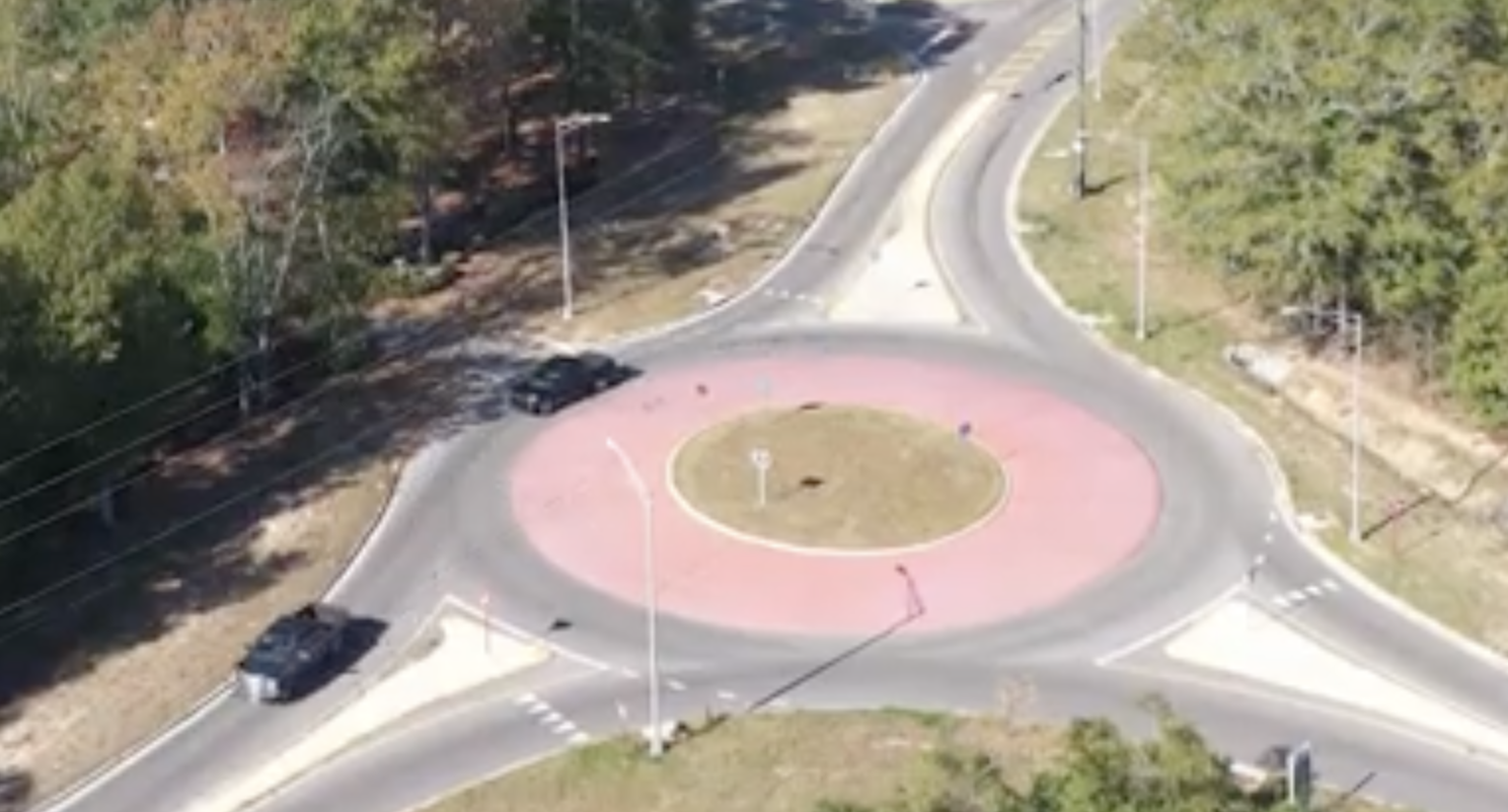
Video: New Roundabout Under Construction at McIver and Old Florence Roads in Darlington County
Promenade at The Point

June Issue 2026
.jpg?width=225)