
Informed Infrastructure has been publishing a “Smart Engineering” issue in May for several years. There have been columns and articles about a wide variety of projects, procedures and policies about smart engineering. Each year, I struggle a bit with this column—not because I don’t think it’s important, but because I’m not confident in my knowledge of the subject.
I can still remember in my early career when we started designing “smart” traffic signals with sensors in the pavement and cameras detecting oncoming traffic. There were a few projects that included the ability for emergency vehicles to pre-empt signals to allow for quicker response time. I’ve since seen and heard about many smart innovations through the years, but, to be more general in the definition of “smart,” I looked up some smart and not-so-smart engineering examples and projects.
Smart: Maine has been joined by Connecticut, Massachusetts, Rhode Island and Vermont to procure a 1.2-gigawatt onshore wind-power project. The project will provide wider transmission throughout the New England region, a problem that has existed for years.
Not-so-smart: The current administration will pay nearly $1 billion to terminate offshore wind leases near North Carolina and New York and then send funds to liquified natural gas projects, drawing criticism from alternative-energy proponents and environmentalists.
Smart: The Coastal Virginia Offshore Wind project, the largest of its kind in the United States, has begun delivering power to the grid with its first commercial turbine generating 14.7 megawatts. Dominion Energy’s project, which faced a federal stop-work order in December 2025, is 70-percent complete and expected to be finished in early 2027 at a cost of $11.5 billion, up from $9.8 billion. (The cost increases are due to tariffs and a suspend work order. Maybe this should be in a not-so-smart paragraph.)
Not-so-smart: The Department of Energy extended an emergency order to keep the TransAlta Centralia Coal Plant in Washington operational through mid-June 2026. The department stated that there remains a need for reliable electricity. However, the plant generated only 8 megawatt-hours in January and February. This amount of energy can be produced by a couple of houses with solar panels on the roofs. So, the plant remains open but is not running.
The not-so-smart examples are, for the most part, policies or decisions that revert to past technologies. Thankfully, I found many more forward-thinking uses of smart engineering.
Mostly Just the Smart
Rhode Island Energy is improving its reliability by investment in technology such as smart switching devices and advanced meters (iimag.link/OQCFT).
Illinois soon could follow in the footsteps of Utah and Virginia with a law allowing plug-in solar arrays, often called “balcony solar.” People already are plugging in these types of small off-the-shelf solar arrays to help power their homes (iimag.link/DRChl).
In the Midwest, where I reside, there are specific pockets of innovation, but our aging infrastructure requires more maintenance than can be provided, mostly in transportation facilities and water systems.
If you have ever traveled from Ohio, Michigan or even Indianapolis to Chicago and beyond, you know there are certain times during the day and week that you should avoid at all costs. There have been hundreds of projects addressing this traffic congestion—advanced warnings and messages, variable toll rates and alternative route suggestions—that have achieved a noticeable difference. But perhaps the future of traffic congestion will be better served by autonomous vehicles that communicate with each other in dedicated lanes.
Utility companies are moving toward smart grids (we just had new meters installed in our city) and transitioning to renewable energy sources. NIPSCO had committed to being coal-free between 2026 and 2028 (smart), but federal orders recently delayed closing of coal plants (not-so-smart) to the tune of $100 million in cost to NIPSCO customers in the northwest region. One reason is to ensure power for data centers, raising the question of why these data centers are not bearing this cost.
Our water system is a major issue in the Midwest. There are still some lead pipes in the system (remember Flint, Mich.?), but leaking pipes is a bigger problem. This is being addressed by smart leak-detection sensors and water-quality monitoring.
After a survey of opinions and studies done by experts, it appears the Midwest is doing well with practical smart infrastructure (e.g., smart maintenance of the aging infrastructure, traffic optimization) and logistics. As is so often the public opinion, the Midwest is solid but maybe not leading the pack. Perhaps getting smarter where it matters most would be a good description. I can live with that.
We’re certainly getting smarter about many engineering solutions to infrastructure. But I recently saw a meme that said we were expecting flying cars by now and then showed a warning on a sandwich that said, “Do Not Eat Wrapper.” (I’m not sure how much smarter we are these days.)

Robert Schickel
Robert Schickel was born in New Jersey and received his BS in Civil Engineering degree in 1971 from Valparaiso University in Indiana. His career started as a bridge design engineer and expanded to include design of various transportation facilities, including highways, bridges, rail lines and stations, and airport runways. Mr. Schickel managed engineering offices ranging from 20 to 140 people. He also served as a consultant to a large utility company. Mr. Schickel currently resides in Indiana and serves as Adjunct Professor for the College of Engineering at Valparaiso University. He enjoys his retired life at his lake house, playing golf, listening to music and spending time with his family, especially his grandchildren.
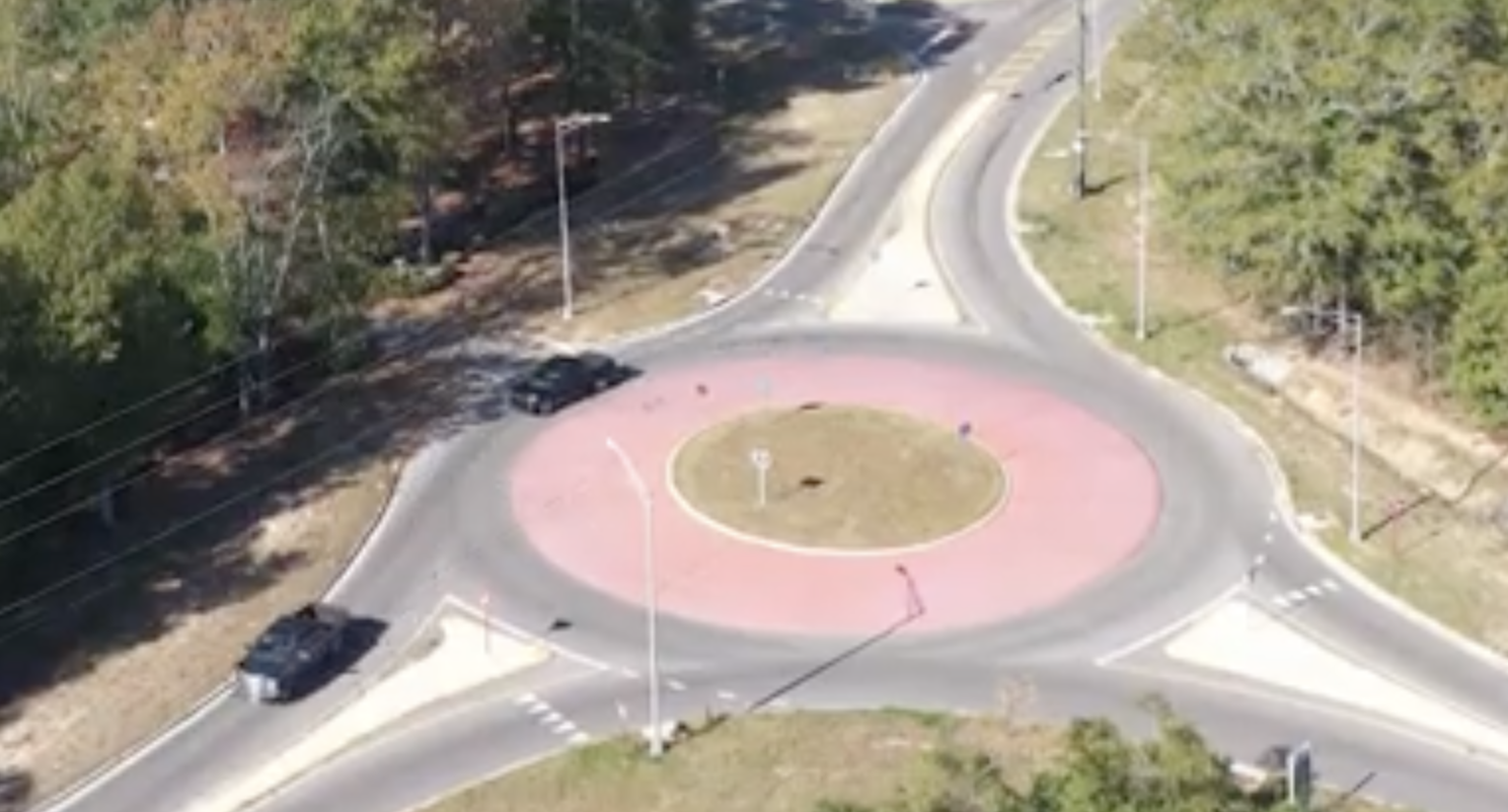
Video: New Roundabout Under Construction at McIver and Old Florence Roads in Darlington County
Promenade at The Point

June Issue 2026
.jpg?width=225)