
From the Editors: Work Underway to Level the Field of Infrastructure
It seems the topic of infrastructure has been increasingly coming up in my readings and conversations. I’m not sure of the reason—perhaps it’s because the due date for this column is near—but I think it’s more likely that this time of year causes the impact of our infrastructure to be more evident. Cold weather and the freeze/thaw cycles cause temporary road and bridge distress. It also puts a strain on heating and plumbing in our homes and buildings. When something does go wrong, the effort to...

Thoughts From Engineers: Coastal Barrier Protection Informs Adaptation Strategies
We’ve closed out 2024 with record-breaking national disasters and, as a country, we’re starting to rethink foundational paradigms and long-established policies. The Federal Emergency Management Agency (FEMA) issued a new Federal Flood Risk Management Standard, effective Sept. 4, 2024, to better reflect current and future flood risks and fortify structures accordingly. The National Oceanic and Atmospheric Administration (NOAA) is revising precipitation forecasts to better integrate climate-scienc...

Executive Corner: Takeaways on 2024 A/E M&A Activity: The Supercycle Era
As 2024 concluded, many A/E leaders were basking in another year of strong growth and profitability. Record performance continues to be driven by escalating backlogs of traditional infrastructure, building and environmental projects as well as in the burgeoning “innovation revolution” consisting of new data centers, renewable energy, decarbonization and climate adaptation, and high-tech manufacturing facilities, among others. Despite persistent headwinds of acute talent shortages, a two-year lac...

Transportation Troubleshooting: Igniting Change: How EV Battery Blazes Are Revolutionizing Transit Facility Design
It’s encouraging to see U.S. transit agencies accelerating their transition to zero-emission battery electric bus (BEB) fleets. But that shift brings with it a need to rethink how bus garages and transit yards are designed to withstand vehicle fires. Fortunately, electric vehicles (EVs) are no more at risk of catching fire than their internal-combustion engine counterparts. But when an EV battery does ignite, it burns hotter and longer than a traditional vehicle fire with increased explosion...

Future Forward: Engineering 2025: Navigating Change, Seizing Opportunity, and Shaping the Future
For the engineering industry, 2025 will be a year of change, some uncertainty, but mostly tremendous opportunity. All told, there has never been a better time to be an engineer or an engineering firm. Metric by metric, market by market, and sector by sector, there’s reason for excitement about the future of the industry. The ACEC Research Institute is the thought leadership center for the American Council of Engineering Companies (ACEC), the business voice of the nation’s engineering industry...

Engineering The Future: Build a Workforce Pipeline That Doesn’t Leak
As our nation works to improve aging and crumbling infrastructure, assembling and retaining the workforce needed to achieve those goals remains a major challenge. Never in my lifetime has the need for civil engineers and all the trades that support them been greater. In the last decade, we’ve witnessed flat enrollments in civil engineering schools for tech associate’s and bachelor’s degrees as well as in the construction trades. That’s further complicated by the fact that the largest cohort in m...

From The Editor: Engineering Musings from a Trip to Canada
First, let me disclose that Bentley Systems is an advertiser for Informed Infrastructure, but I would write about their event even if they weren’t. During the first week of October 2024, I was fortunate enough to attend the Bentley Year In Infrastructure Going Digital Awards event in Vancouver, British Columbia, Canada. I have been retired for a few years and haven’t attended any major engineering events since then. Maybe all conferences have raised the level of professionalism in the last fe...
Transportation Troubleshooting: Where Will Intelligent Transportation Systems Take Us Next?
We’ve all been there. You’re driving along a familiar road when the dreaded solid red line suddenly appears on your navigation screen, too late to seek an alternate route. You now have no choice but to wait while emergency crews clear the fender bender causing the backup. Now, imagine a scenario in the near future where collisions are a rare occurrence. We’re on our way there, thanks to investments in transportation technologies and advances in vehicles of all types—cars, buses, trucks—all dr...
Thoughts From Engineers: Protecting Source Water Through Watershed Planning
During a road trip through the Catskill Mountains of New York state during the summer, we stopped at one of 19 heavily monitored and secure reservoirs. The Downsville Reservoir is in a heavily wooded area on the East Branch of the Delaware River and drains a watershed 370 square miles in size before sending water down a 26-mile-long tunnel to aqueducts further downstream and then, eventually, to the millions of residents of New York City (NYC). When it comes to source-water protection, the NY...

Executive Corner: Ownership Transition Planning: Begin at the End
The oracle of Omaha, Warren Buffett, once said, “Someone is sitting in the shade today because someone planted a tree a long time ago.” I’m often reminded of this quote when I think about ownership planning and the critical elements of a successful transition. It’s vital to approach ownership planning by starting with the end in mind. While ownership transition often is perceived as a straightforward matter of transferring assets and control, it actually requires a much broader spectrum of go...
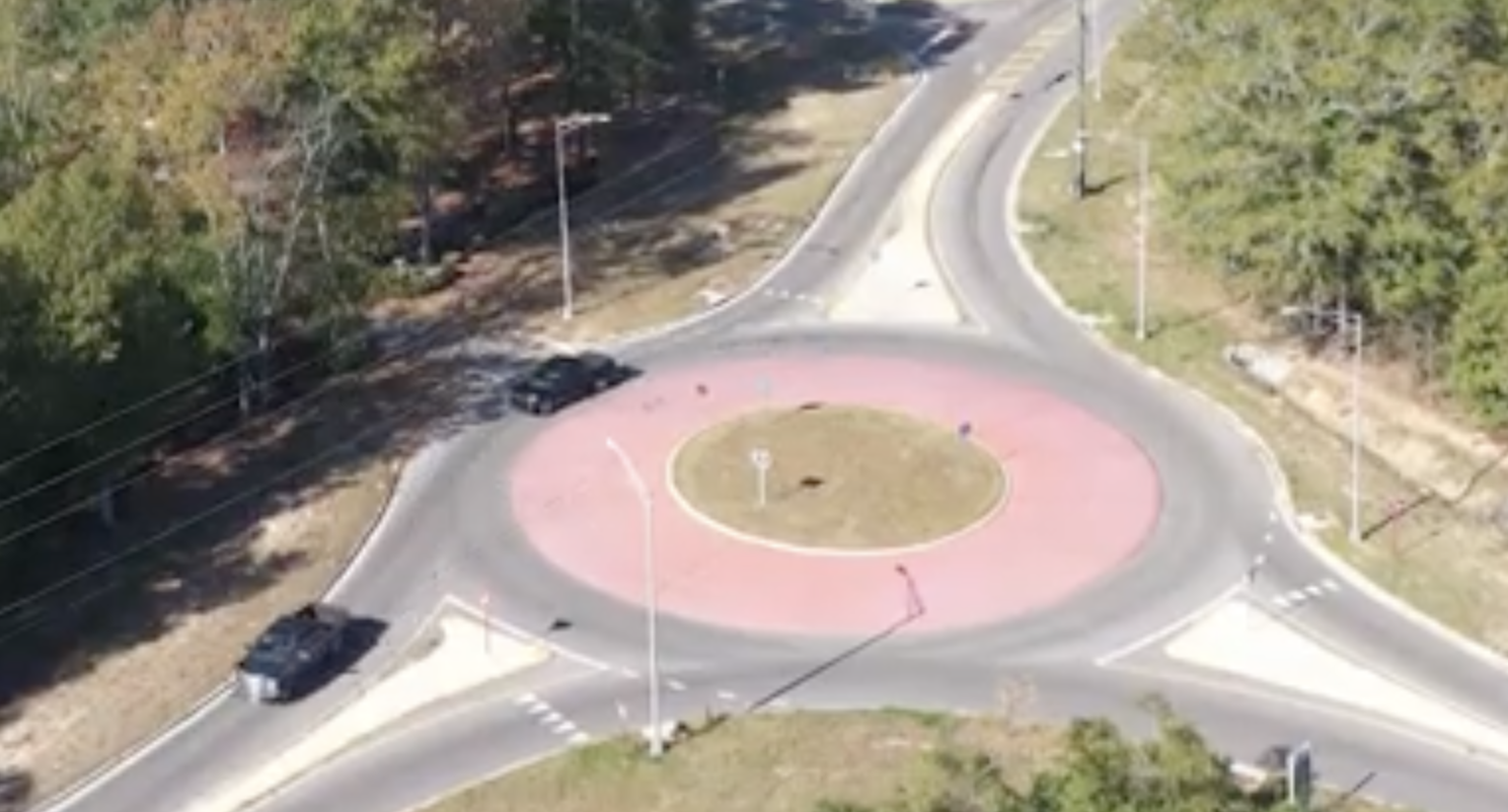
Video: New Roundabout Under Construction at McIver and Old Florence Roads in Darlington County
Promenade at The Point

June Issue 2026
.jpg?width=225)