
As a grandparent, you get a chance to relive your best moments with your children. It’s amazing how much you actually feel that circle of life. A very similar approach applies to how senior leaders need to engage young professionals.
My Story
When I started my career as a civil engineer in the early 1980s, I was treated as an apprentice. I was given specific tasks to do on my own, while being actively checked in on by my manager, and I was engaged in many activities that were way above my paygrade.
It was my opportunity to see, hear and feel what it’s like to deal with clients—in both easy and difficult situations. I observed when body language wasn’t congruent with what people were saying. I learned about stakeholder relations by seeing how public meetings can be overtaken by mob mentality. I learned from late State Senator and Assemblywoman Patricia MaGee that there are many CAVE people (Citizens Against Virtually Everything), NIMBY (Not in MY Backyard) and BANANAs (Build Absolutely Nothing Anywhere Near Anyone).
Successful projects need active and continuous stakeholder engagement so needed infrastructure doesn’t get derailed. That process is somewhat foreign to engineers, as we’re wired to make decisions based on facts and not emotions, so we need training to pick up on those nuances.
And I needed to learn how to bring the best of my peers and direct reports so I could be a successful conductor of the project-team orchestra. Through experience, I decided that the client was the project, and the team needed to meet the project’s quality, schedule and budget. I was taught how to be a project manager by being a deputy project manager on small projects.
That hands-on apprenticeship process made me ready to take on the role of a project manager as soon as I earned my P.E., five years after graduating and when I was still in my 20s. I was managing a portfolio of projects with planning and design value of approximately $10 million, which in the 1980s was a phenomenal amount of money.
I was fast-tracked into being an effective and efficient project manager. I repeated that process with the employees who worked for me, and I’m proud to say that many of them went to major leadership roles in the public and private sectors, running companies and agencies. I’ve seen that this process works.
Others Should Share This Story
There are so many reasons to go back to that apprenticeship approach. Currently there are three civil engineering jobs for every two civil engineers. The experience curve for our profession isn’t a nicely distributed bell-shaped curve; it’s a double-humped camel. The largest demographic of practitioners are baby boomers, who are retiring in large numbers.
The mid-career civil engineer should be the largest demographic, but 15 to 20 years ago more than 50 percent of graduating civil engineers were hired by the financial sector. Finance realized that while finance majors took a lot of risks as they wanted to be at the top as quickly as possible, civil engineers had all the necessary skills, plus they understood risk and boundary conditions. They produced exemplary work without the risks the sector was seeing from others.
In those days, the starting salaries in finance were much better than in civil engineering, so we lost a large cohort. The next industry that started hiring our graduates was the tech industry. If we had more graduating civil engineers than jobs, I would welcome these graduates going into other fields. We need that creative problem-solving mentality across all disciplines. However, since we weren’t graduating enough students to meet the needs, and we were losing them to other industries, it’s making the infrastructure renaissance more difficult to achieve.
To maintain public health and safety with larger infrastructure needs than ever, and a smaller cohort of civil engineers than available, we must go back to the hands-on apprenticeships of the past. Even on mega projects, there’s a staff member with great promise who should be bolted to the project manager to learn the ropes, and within six to 12 months, the deputy can move up, and the process starts again on another project.
Many have said that with the current personnel shortage, we don’t have time to spend on direct apprenticeships. I believe we can’t afford not to make this investment. Because we’re relying more on computer models and AI, we need engineers who understand what the solutions should be, whether or not an answer is in the realm of correctness and when it’s time to do a deep-dive check. And then with that correct and constructable design, we need the skills to sell it to the stakeholders and deliver a successful project.

Maria Lehman
Lehman, P.E., NAE, NAC, F.ASCE, ENV SP, is executive advisor for U.S. Infrastructure at GHD. She is the current interim executive director and past president of the ASCE and currently serves as a member of the National Infrastructure Advisory Council. She also is the Samuel P. Capen professor of engineer management at the State University of New York at Buffalo; email: [email protected].
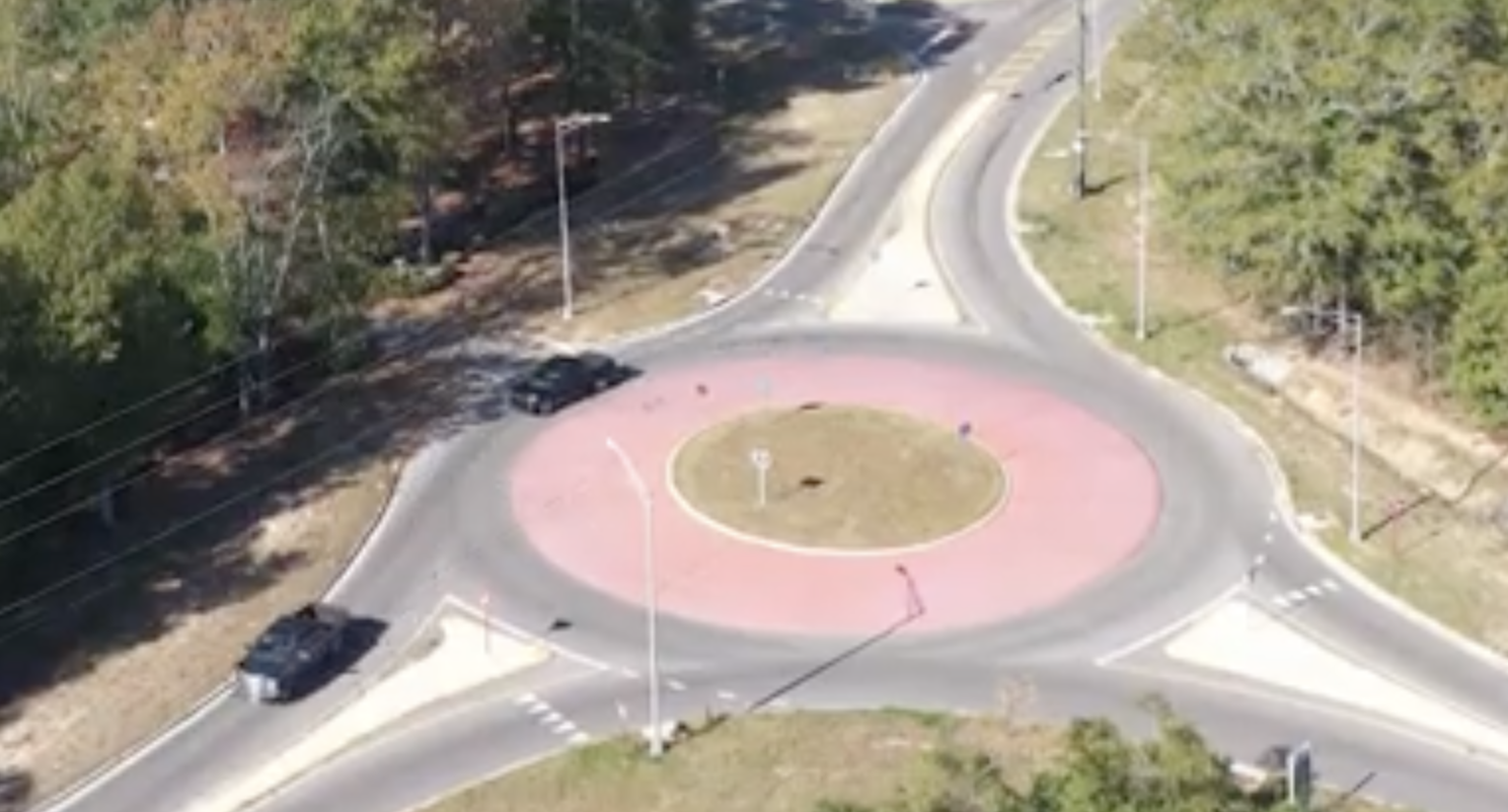
Video: New Roundabout Under Construction at McIver and Old Florence Roads in Darlington County
Promenade at The Point

June Issue 2026
.jpg?width=225)