Fabric buildings offer a timely, affordable solution for college athletic and event facilities.
The past decade has presented college and university facility planners with a multitude of challenges. The COVID-19 pandemic altered some aspects of campus life temporarily and others permanently. Construction material costs are finally starting to stabilize, but they remain significantly higher than they were five years ago. Many institutions have struggled to provide the educational and residential buildings necessary to keep up with their increasing enrollments.
Universities have experienced a particularly high level of volatility in the area of athletics. The old days of having a solid stadium or arena to play in, while getting by with a mediocre gym or fieldhouse for practices, are long gone. More and more, facilities have become a primary recruiting tool for athletes, with athletic directors across the country racing to ensure that everything from weight rooms to basketball court designs all scream “state of the art” to any potential recruit who sets foot on campus or watches their teams on television.
What’s been most eye-opening is that this phenomenon has spread beyond just the usual major conference suspects in Division 1. Of course, not all pockets are as deep as others, but at least to some degree, everybody—even at the Division 3 level—is leaning on their alumni and boosters to help provide the best facilities possible.
The pressure has been ratcheted up even more since the name, image and likeness (NIL) era began in 2021, a game-changing shift that allowed amateur athletes to be paid for marketing opportunities. Between NIL and another monumental change that preceded it in 2018—the NCAA transfer portal—high-quality facilities have never played a greater role—not just in attracting student-athletes, but also in helping keep them from potentially transferring to a different school before their collegiate careers conclude.
Solving the Time and Money Equations
For large-scale projects like major-college football stadiums and basketball arenas, the massive amount of seating required—in addition to suites, concourses and other stadium features—severely limits the available construction options, all of which are expensive and often take years to complete.
However, when it comes to practice facilities and venues for non-revenue sports, many universities have helped themselves out from a budget standpoint by looking beyond traditional brick-and-mortar construction. One of the most popular and cost-effective solutions in play for colleges today is the tension fabric building, which takes the known benefits of fabric cladding and applies them to a permanent facility.
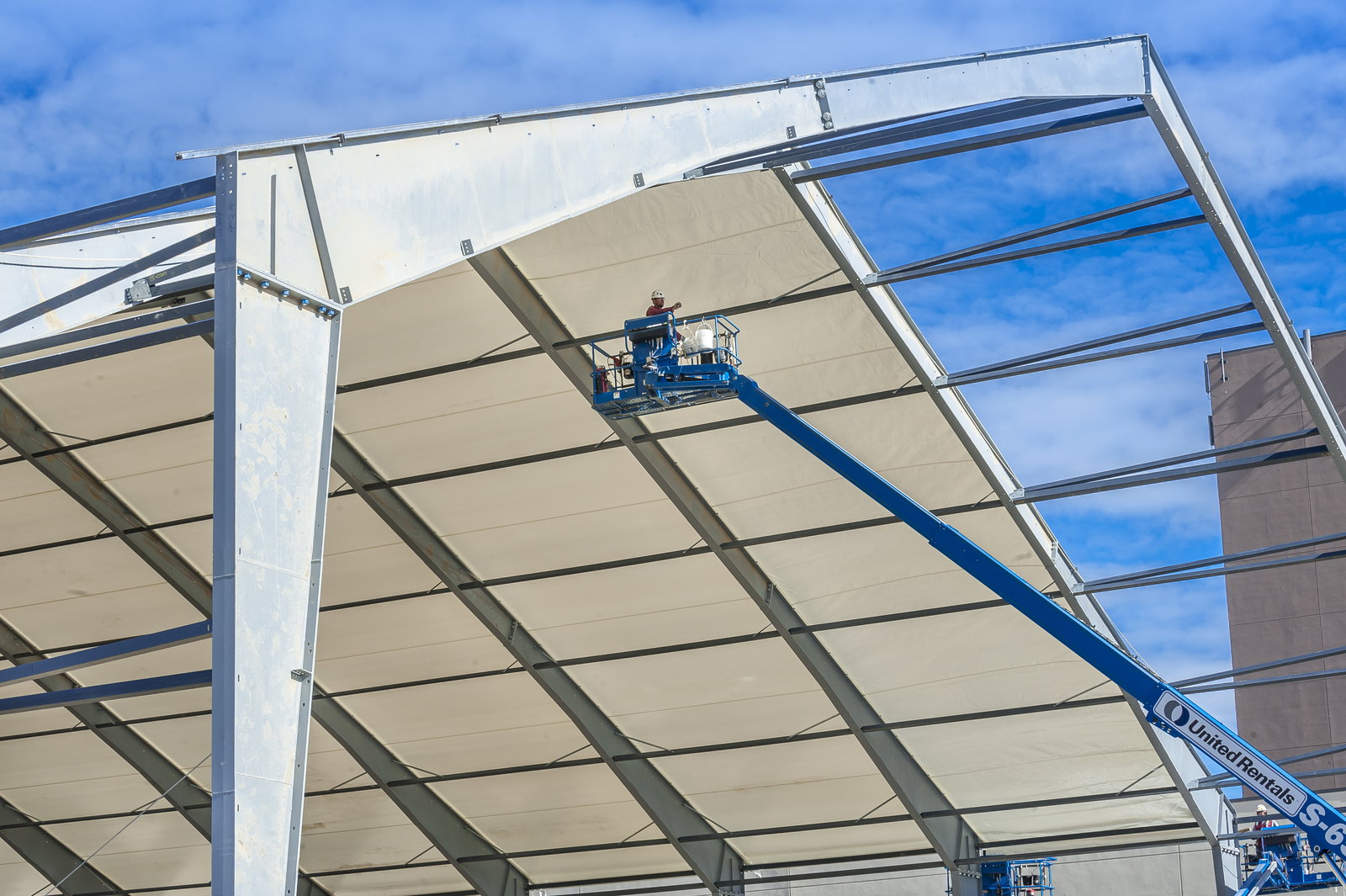
Historically, tension fabric structures had relied upon hollow-tube, web truss framing systems. A turning point for fabric buildings came almost 15 years ago upon the introduction of a new design method that instead utilized a structural steel I-beam frame. This innovation allowed fabric buildings to be designed in the same fashion as conventional construction projects.
The engineering credibility of this rigid-frame approach was unquestioned, whereas web truss designs had often been viewed as subjective among engineers. Web truss structures had another serious limitation in that they were typically supplied only in predetermined sizes. With a structural steel frame, end users have far more design flexibility. Facilities can always be engineered to the optimal specifications for their intended uses, since every project begins with a clean sheet design.
From an engineering standpoint, brick-and-mortar buildings are obviously structurally sound as well. Where fabric becomes advantageous by comparison, however, is that the cost to clad a building with polyvinyl chloride (PVC) fabric walls is much less than constructing masonry walls or using other conventional materials. And the larger a building design becomes, the more that price differential is amplified.
The composition of rigid-frame fabric buildings also allows them to be completed much faster than conventional construction, with projects typically completed in several weeks or months, depending on the scope. A key reason for the shorter lead time is that leading fabric structure manufacturers are full-service suppliers that can handle every step of the project, from design to manufacturing to installation. This one-stop-shop philosophy also helps ensure higher quality control and avoid unexpected delays from waiting on outside vendors.
Optimized for Campus Sports
There’s no getting around the fact that turf sports like football and soccer take up a lot of space, especially if a full-size regulation field is desired. Rigid-frame design allows tension fabric buildings to have long clear spans without any need for support beams that would interfere with the playing area. For indoor facilities where a track is also needed, it isn’t a problem to go wider and longer with the building dimensions.
Court sports like tennis, basketball and volleyball often come with defined guidelines for building peak height and roof slope to allow for the necessary space around the playing surface boundaries. Because all building measurements can be customized from the beginning of the design process, engineers can easily account for specific sports and activities—along with any spectator seating needs—when determining the proper building dimensions.
Support equipment such as scoreboards, video platforms, court dividers, netting or batting cages are commonly required in a college athletic facility. The most efficient use of space often requires these types of items to be suspended from above or affixed to the walls. Likewise, features like fire suppression systems, lighting and HVAC must be accounted for from the very beginning of a project. With an I-beam design, engineers can accommodate any hanging or collateral loads that may need to be supported by the structural frame within the original plans.
Interior Environment
PVC has been the primary cladding choice for sports facilities for many years because it is more durable than polyethylene alternatives. Manufacturers have improved PVC materials in recent years with enhanced options that deliver longer life expectancy due to added protective layers.
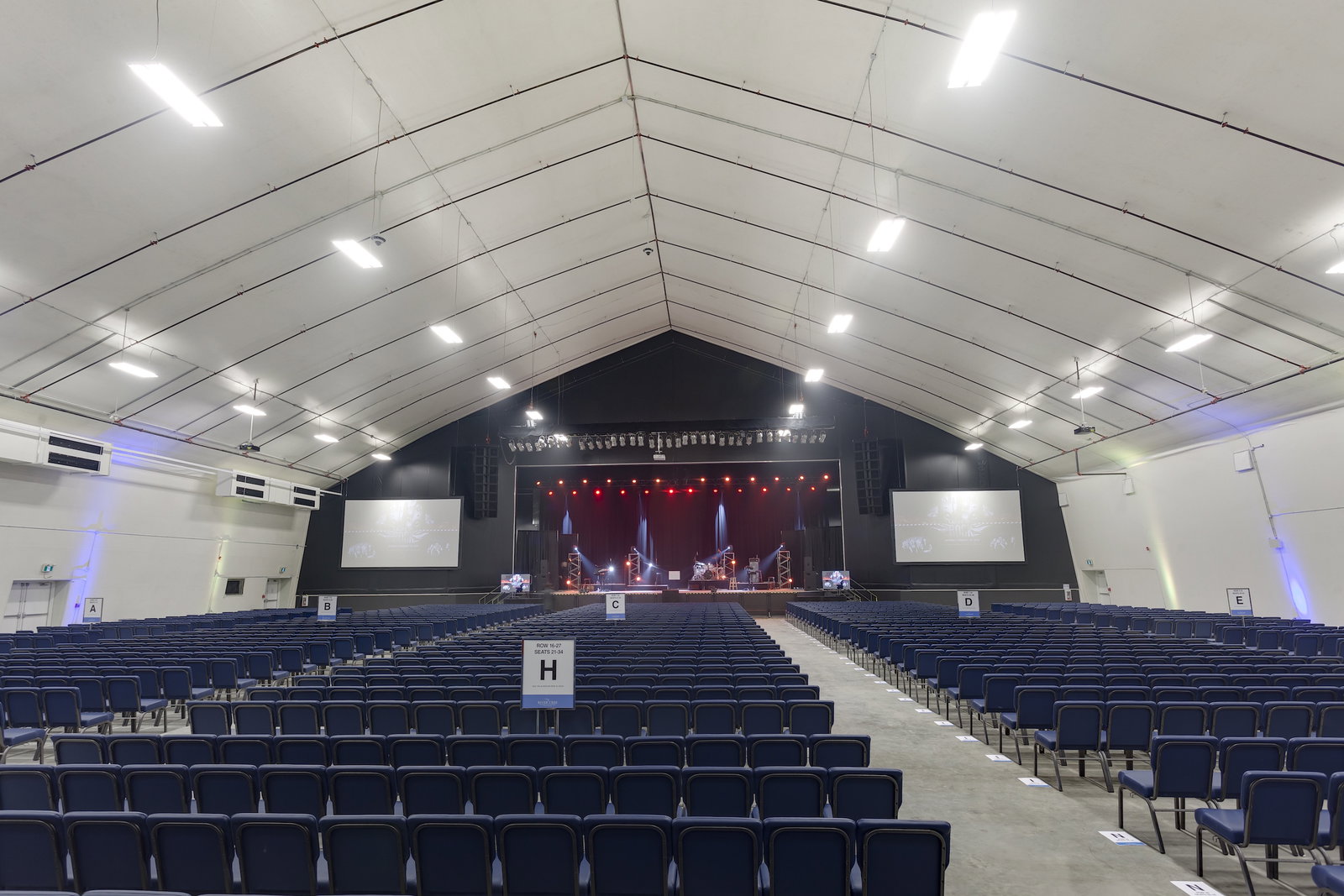
The combination of improved fabric with the rigid-frame structural approach also allows suppliers to apply appropriate insulation to meet energy codes or user requirements. Insulation is secured and protected by a liner made from similar PVC material. The result is an airtight structure designed for maximum energy efficiency and reduced operating costs. When equipped with proper HVAC systems, these buildings can accommodate any athletic application—from hockey arenas to swimming pools and beyond.
The fabric liner also provides aesthetic benefits with a softer feel, better acoustics and improved lighting due to fabric’s reflective nature. Players and spectators often walk away impressed with the overall atmosphere.
Blending In
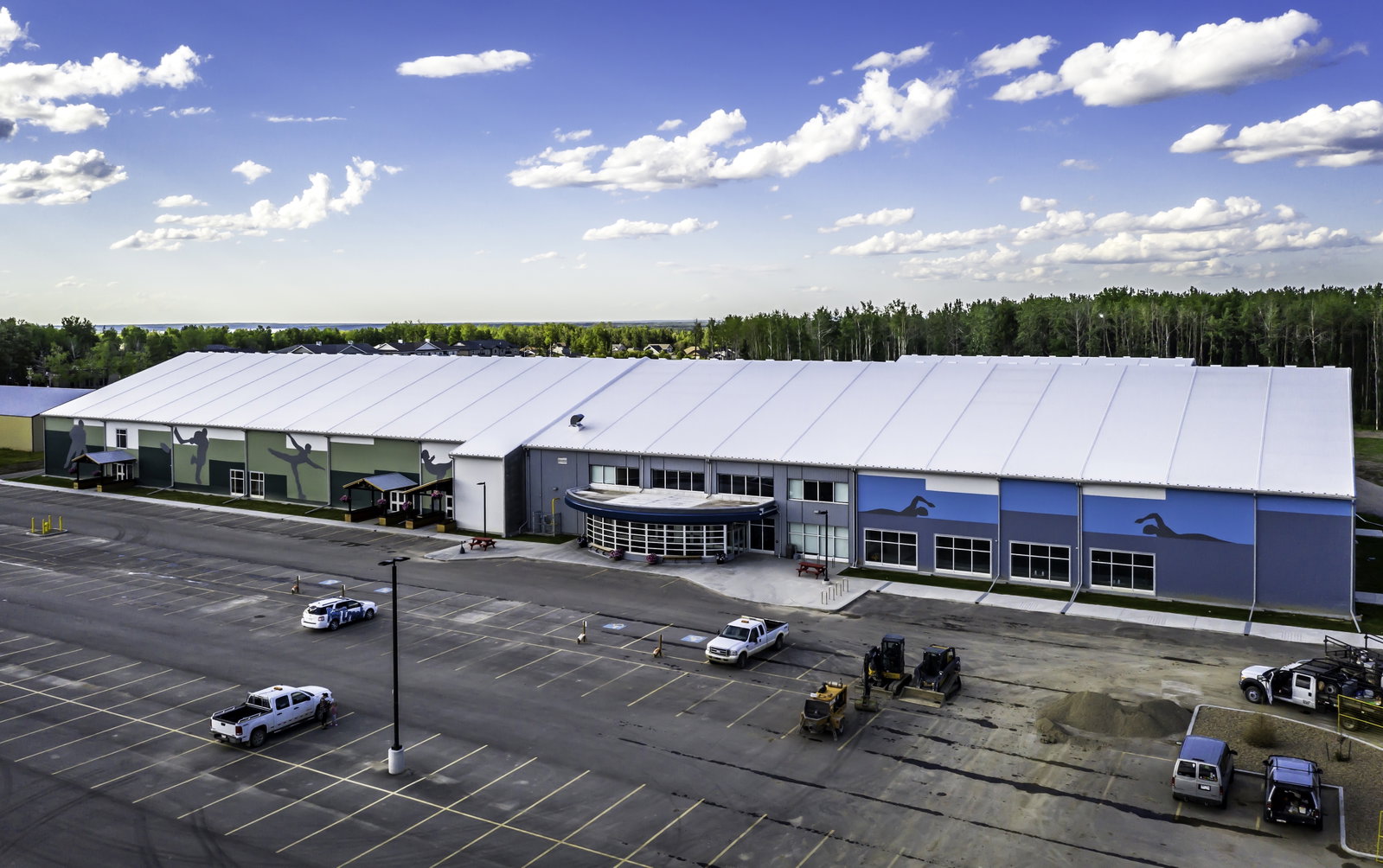
In contrast to inflatable or older-style fabric structures, modern I-beam framed buildings provide a more conventional appearance. Straight sidewalls allow facility planners to incorporate brick façades or other architectural features to match campus design.
PVC fabric is available in various colors, allowing customization for both interior and exterior finishes. Many finished facilities appear indistinguishable from traditional buildings.
Although athletics and recreation have been the primary applications, these structures are also viable for other campus needs. Considering faster timelines and lower costs, fabric buildings have become an attractive permanent solution.
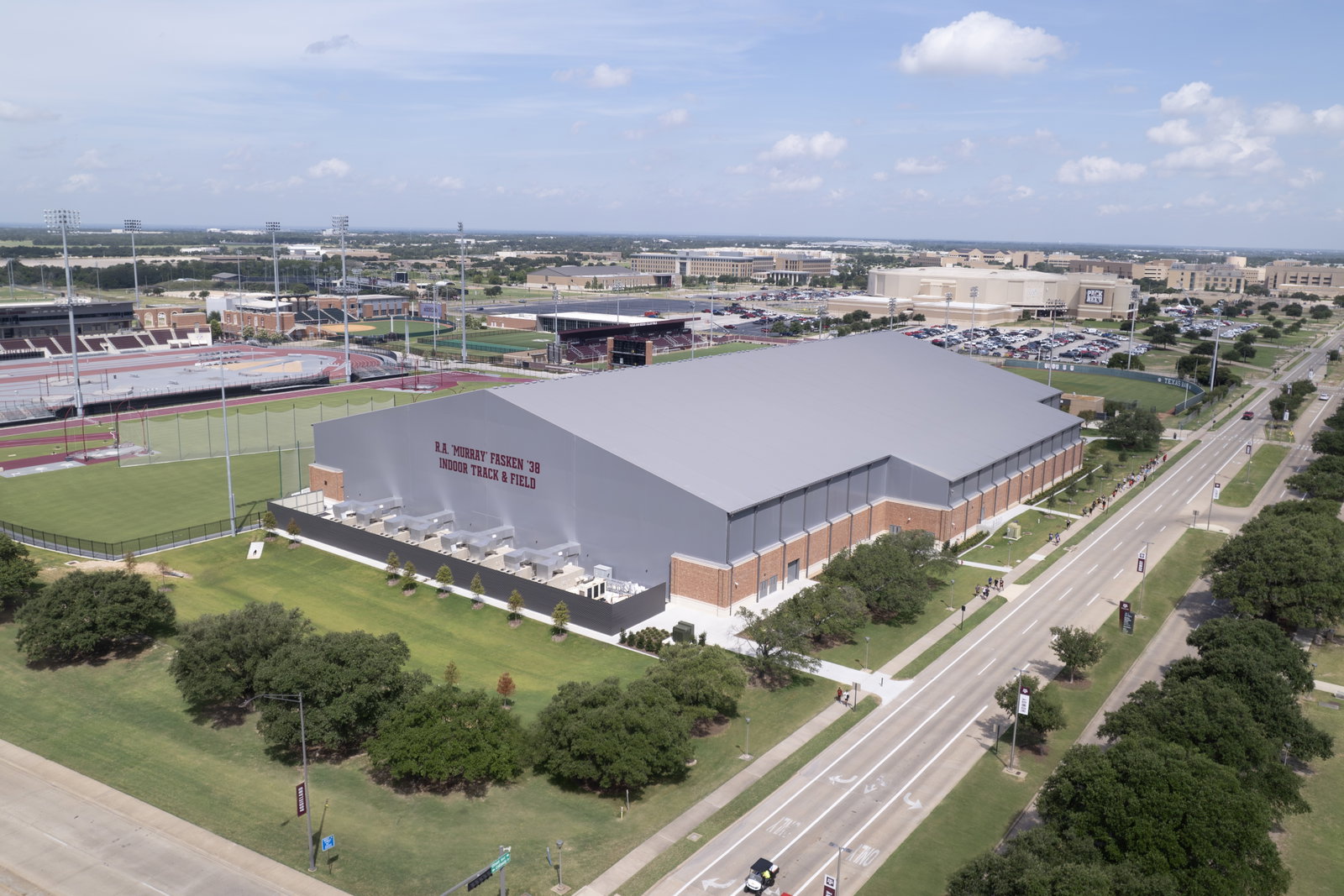
Indoor Track Facility – Texas A&M University
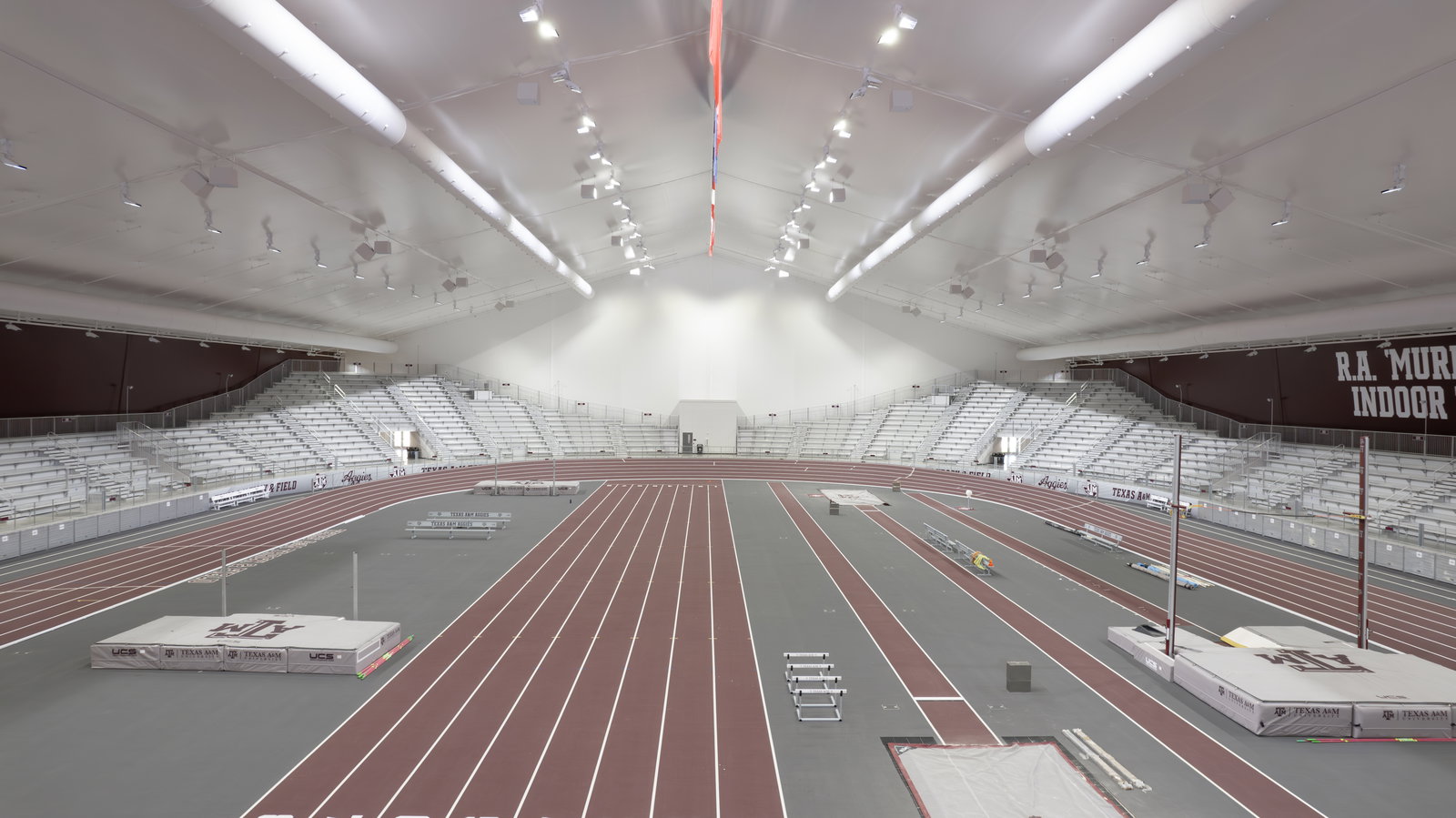
Texas A&M University opened its new R.A. “Murray” Fasken ’38 Indoor Track & Field facility in College Station, Texas, in January 2024. The building is a tension fabric structure provided by Legacy Building Solutions. It features steel I-beam framing, cladded with gray 28-ounce PVC fabric on the exterior and an interior fabric liner, along with a 20-foot-high exterior brick façade.
“We had great communication with Legacy’s design team to calculate point loads on the steel frame for lights, speakers, HVAC, banners and other items,” said Craig Valka, executive associate athletics director for facilities and capital projects at Texas A&M. “The building was installed very efficiently.”
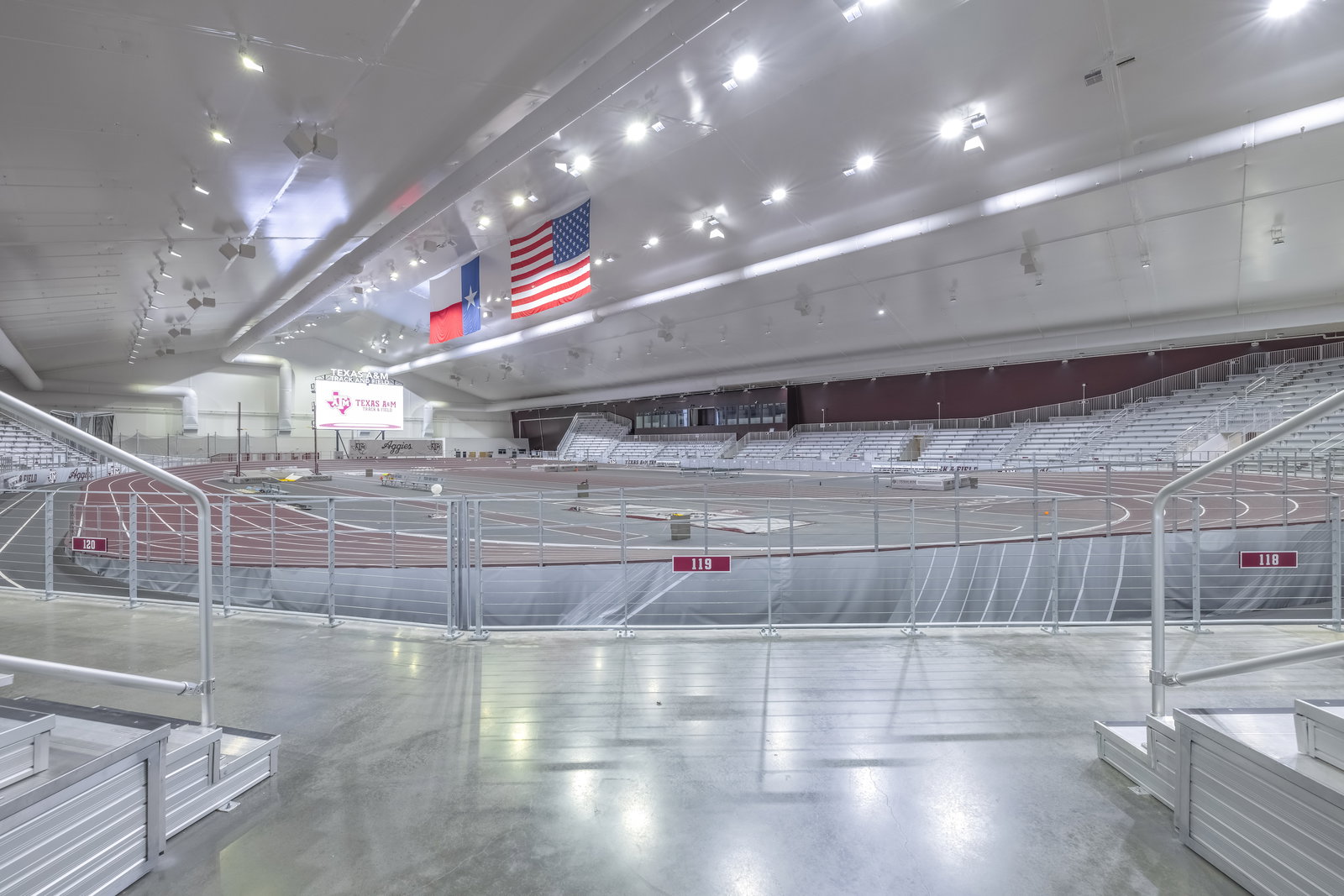
The 130,000-square-foot facility houses a 200-meter track with eight sprint lanes, with room for long jump, triple jump and indoor hammer events. Bleacher seating goes almost a full 360 degrees around the track and accommodates about 4,000 people. An elevated concourse provides strong sightlines and circulation.
The facility features R-30 roof and wall insulation working with an airtight vapor barrier liner system to maintain consistent indoor temperatures.
“Everybody loves it,” Valka said. “The acoustics are great. Lighting is perfect. It’s got terrific openness and feel. It’s a wonderful environment from a fan perspective.”
Shannon Humbert
Shannon Humbert is Sports Business Development Manager, Legacy Building Solutions.
Video: New Roundabout Under Construction at McIver and Old Florence Roads in Darlington County

Promenade at The Point
June Issue 2026
.jpg?width=225)