
Thoughts From Engineers: A First for the Great Lakes: Water Piped Out and Back In
The city of Waukesha, Wis., received permission in 2016 to divert 8.2 million gallons of Lake Michigan water per day as a new source of drinking water. Waukesha will use Milwaukee’s existing infrastructure to pump water out of Lake Michigan and 12.5 miles of additional pipeline to move the water out of the watershed. An additional 23 miles of pipeline will be built to bring treated wastewater back to Lake Michigan. Waukesha is a thriving Midwestern city located in the middle of one of the wor...

Final Thoughts: When Did You Choose Your Career?
Some people have known all their life what their chosen profession would be, perhaps because of a particular skill or because a relative was a successful example. Others may postpone that decision until later in life, perhaps during college, because they’re just not sure. Some choose second careers much later in life when the first choice proves to be no longer relevant. A few weeks ago, I listened to someone address people of various ages ranging from retired to young children, but his focus...

ReEngineering the Engineer: To Change or Not to Change? The Answer Usually Is to Change
Codes have changed significantly through the years. When I started engineering, the structural section of the North Carolina Building Code was just more than 100 pages and was basically the “one-stop shop” for all our structural engineering analysis and design criteria. There were material codes as well, but they were also similarly simple, and calculations were easy to follow. Today, the structural portion of the International Building Code itself is about 200 pages, but it also references o...

Infrastructure Outlook: Power Play: Protecting Critical Infrastructure from Cyber-attacks
Governments generally define the essential assets of a functioning society as its critical infrastructure, including electricity, communications, heating, healthcare and transport networks. For the United States, attempted cyber-attacks on these systems continue to be an attractive target. The ability of a foreign actor to gain control and operate them remotely would most assuredly wreak havoc. The lives of millions of people would be immediately impacted if one or more of these major systems be...

From the Editor: Use Different Viewpoints to Uncover the Unknown Unknowns
I read a meme-like quote a few days ago: “It amazes me that I can wirelessly transfer data from my brain to another brain by vibrating the air with my voice box.” Simultaneously whimsical and thought provoking, it reminds me to think of everyday things—like talking—from a different perspective. A similar approach may have been on the minds of scientists who recently discovered something startling and new about sound itself. Four hundred years ago, Isaac Newton laid down the laws of classical...
From the Editor: A Brief Glimpse at Useful AEC Pocket Tech
Living with tech is a lot like living with a new puppy: it’s not easy to recognize changes occurring through time until you step back and look at where we were not long ago compared to where we are today. Every couple of years, I see a graphic (or sometimes a video) showing how the number of devices on a typical literal desktop has reduced through the years, thanks to advances in smartphone technology. You can see one from the CATO Institute at bit.ly/2Im7ThI. As the graphic illustrates, it’s...
Thoughts From Engineers: The Hidden Monster That’s Our Failing Water Infrastructure
An aging house built in the 1930s with chipping paint, a porch door that swings eerily in the wind and precariously leaning support beams gets attention. A bridge with rusty trusses and roads with potholes get attention as well. People complain—loudly—to their local and state representatives about the rough drive and costly damage to their cars. There are plenty of stories in the news about crumbling highways and third-world airports, but not so much about our water infrastructure—until now....

Executive Corner: The Latest Trends in A/E Stock Valuation and M&A Pricing
Rusk O’Brien Gido + Partners, LLC recently released its annually updated ”A/E Business Valuation and M&A Transactions Study.” Data from the sixth-edition study show remarkable stability in valuations of minority interests in privately held A/E and environmental consulting firms. As illustrated in Figure 1, enterprise values as a multiple of gross revenue, net service revenue, and pre-bonus earnings before interest and taxes (EBIT) were virtually unchanged from 2017 to 2018. This is not too...
Final Thoughts: Let’s Talk About Our Favorite Projects
As I sat at my desk trying to come up with an interesting topic to discuss, I decided to let you, the reader, do a little thinking about your interesting work topics. It’s important to realize the effect projects have on you as well as others, so I’ll mention a few of the projects I was fortunate enough to be part of and invite Informed Infrastructure readers to think about some of the projects they worked on. Most Challenging Project Have you worked on a project that really challenged you...

Code Update: AISI Publishes Design Example to Illustrate New Method for Analytical Modeling of Cold-Formed Steel Structures
Engineers in the construction industry have traditionally relied on simplified approaches to building design based on standardized formulas and tabulated solutions. However, as software and tools evolve and become more accessible, the industry’s forward-thinking professionals are moving toward a more digital approach that leverages analytical models tailored to specific projects. Analytical modeling is a relatively new approach for many engineers, but it’s becoming more common in the industry...
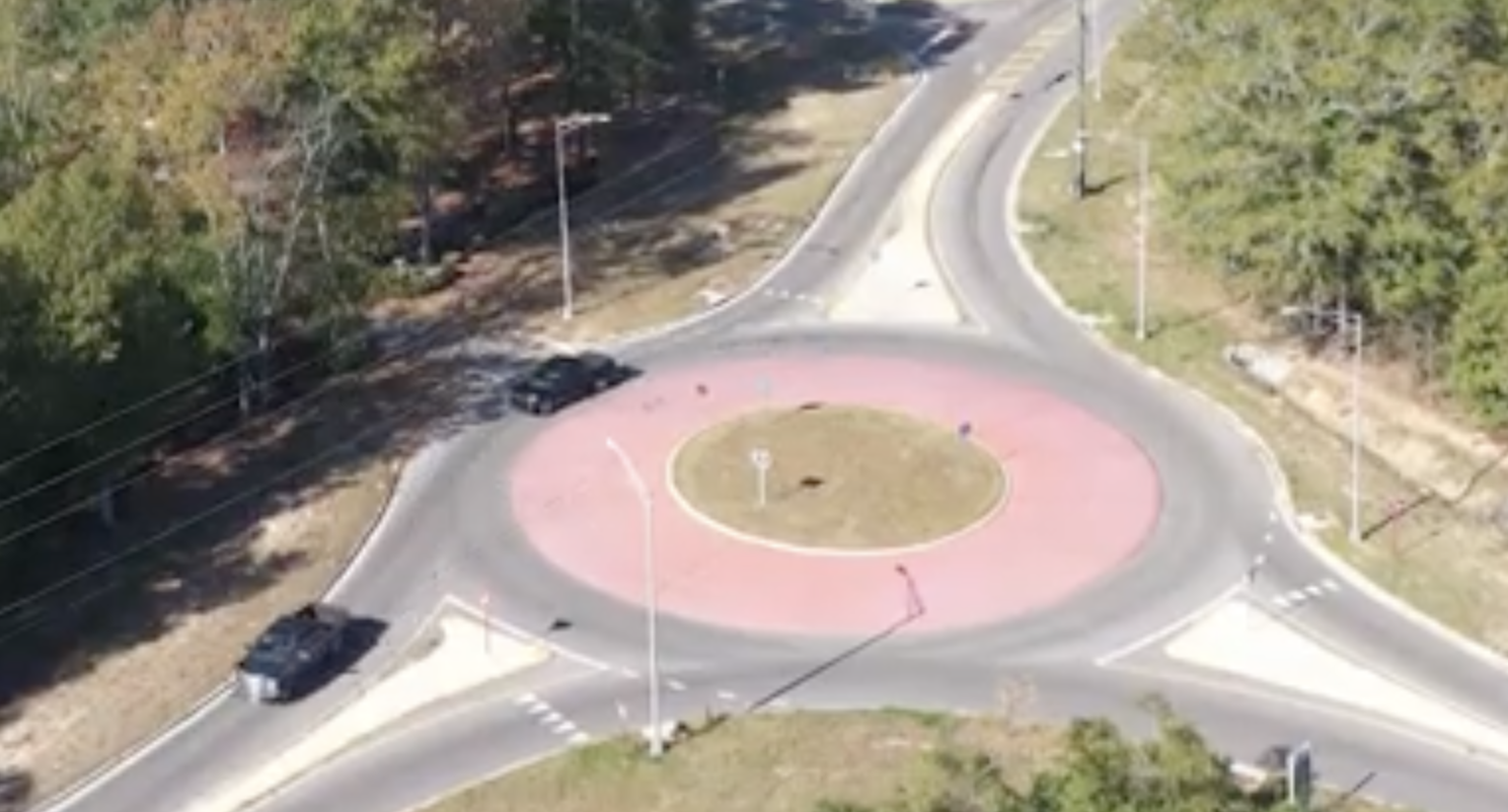
Video: New Roundabout Under Construction at McIver and Old Florence Roads in Darlington County
Promenade at The Point

June Issue 2026
.jpg?width=225)