
Off Rope! Drones for Bridge Inspection Increase Safety, Decrease Costs
It requires a few things for a bridge engineer to become a rope-access technician and climb up and down the most-difficult and complicated bridges: • No strong fear of heights. The photos in this article show that to be obvious. • A lot of training. Any technician needs to become certified by the Society of Professional Rope Access Technicians (SPRAT). The highest level (Level Three) requires hundreds of hours of rope work as well as completing three training programs and exams. • An in...
AI Brings a New Era of Sustainability to Structural Engineering
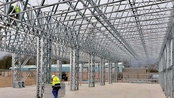
Construction workers put together a truss frame designed through AI. Every year brings new technological innovation to the engineering sector. For example, the industry now is in an age in which 3D-printed structural parts and generative-design artificial intelligence (AI) work together to suggest bridge concepts. The pressure to balance resource-intensive machinery and tech tools with sustainability is more critical, especially as more people and businesses are aware of t...

World Logistics Center: Engineering Heavyweights Collaborate to Ease California’s Warehouse Space Demands
Artist’s renderings show the World Logistics Center, which is set to break ground in Moreno Valley, Calif., later in 2023. (Stantec/Highland Fairview) The quest for warehouse space is more challenging than ever. Vacancy rates are at an all-time low in metropolitan areas across the United States, according to Prologis, a real estate investment trust headquartered in San Francisco that invests in logistics facilities. The situation is particularly dire in California for several reasons, incl...
Ready to Roll: How 1,000 Pounds of Spinning Metal Overcame Onramp Runoff
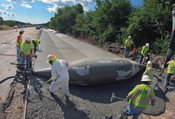
To complete a Missouri ditch-liner project, Realm Construction poured 400-450 linear feet of concrete a day and finished the project more than one week ahead of schedule. Near the Kansas City International Airport lies a well-traveled but problematic onramp that connects NE Cookingham Drive to I-435. A field that runs parallel to the ramp often produces significant rainwater runoff that makes its way onto the onramp. Sedimentary dirt and debris would fill the south side of th...

Infrastructure Outlook: How (And Why) Transport and Logistics Companies Can Use Technology To Achieve Net-Zero Goals
Freight transportation is one of the most-important cogs in today’s global economy. When the container ship Ever Given got stuck in the Suez Canal in 2021, global trade was disrupted on a massive scale. The delayed shipments caused by the Ever Given led to supply chain disruptions and affected businesses’ ability to access necessary raw materials, components and finished goods. This, in turn, caused production delays, inventory shortages and increased costs for companies. On top of that, the...

From the Editor: What Should We Do With Spaces Along Highways?
Environment California recently performed a study about using space along highways for solar-panel fields. California has been a leader in solar-energy production, and this report states that three counties could provide enough energy to power 270,000 homes annually. Try to balance this with the current grassy or weedy areas that need continual maintenance or the occasional pond that serves a purpose but perhaps not as important as creating energy. Since I was in the transportation design fie...

Executive Corner: Two Keys to a Successful A/E Practice: Financial Discipline and Strong Ownership Culture
Through the last 25 years, I’ve had the pleasure of working with hundreds of A/E and environmental consulting firms of all sizes across the United States and abroad. Of the firms that have enjoyed sustained growth and consistent profitability through economic disruptions as well as multiple generations of leadership, I’ve observed two key characteristics or “success variables” that have been present in almost all cases: 1) disciplined financial management with timely reporting of key performance...

Transportation Troubleshooting: How States Are Approaching Electric Vehicles and Highway Maintenance Funding
The way roads and highways are funded must change. Motor fuel tax revenues are declining due to the increasing fuel efficiency of vehicles, and this trend will accelerate as plug-in hybrid and fully electric vehicles (EVs) command a greater share of personal transport. EVs use the same public roadways as drivers of internal combustion engine (ICE) vehicles—and, due to the extra weight of batteries, EVs can cause more wear and tear per mile than ICE vehicles do. However, EV drivers don’t pay f...

Change Leader: Sustainability Needs to Be Part of Any Infrastructure Project
This interview was recorded by Todd Danielson, the editorial director of Informed Infrastructure. You can watch a video of the full interview above or by visiting bit.ly/461fcmx. Rodrigo Fernandes is the Director of ES(D)G - Empowering Sustainable Development Goals for Bentley Systems. It may be paraphrasing a bit, but Rodrigo Fernandes hopes he’s out of a job within five years. “The ultimate outcome for a chief sustainability officer would be to disappear in a coupl...

Future Forward: Prepare for the Future in the Beginning Design Phase
This particular interview was recorded by Todd Danielson, the editorial director of Informed Infrastructure. You can watch a video of the full interview above or by visiting bit.ly/44LLRLl. Ari Raivetz is the founder and CEO of Transcend. According to Ari Raivetz, many of the problems in our current infrastructure stem from poor designs that had to be made quickly, under deadline, without considering all the uncertainty and change that will inevitably happen. “We’re...
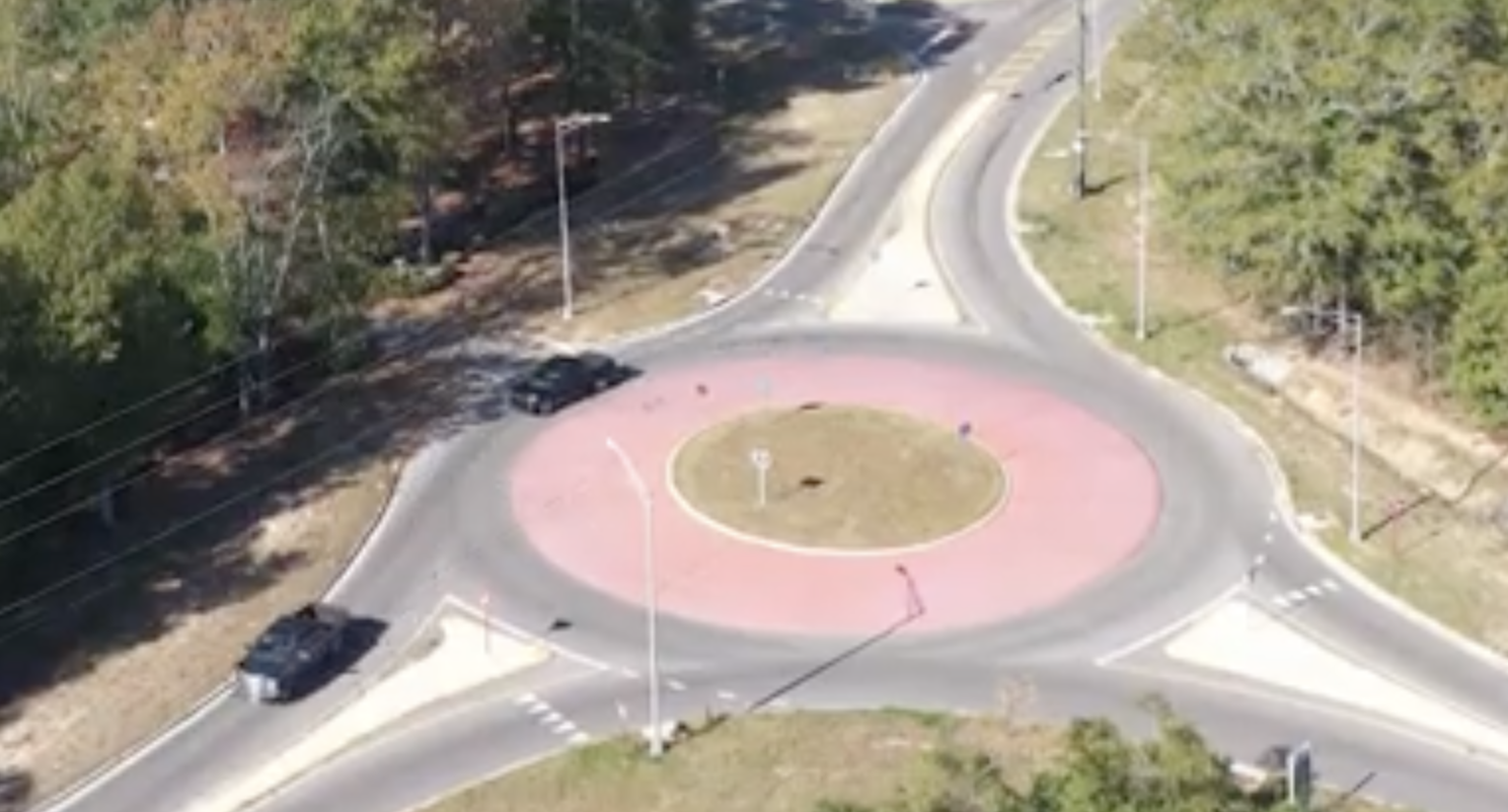
Video: New Roundabout Under Construction at McIver and Old Florence Roads in Darlington County
Promenade at The Point

June Issue 2026
.jpg?width=225)