In this section, Informed Infrastructure compiles infographics from trusted sources that reveal insight on infrastructure spending. We also compile some of the top infrastructure stories that shouldn’t be missed. For ongoing news coverage, turn to Informed Infrastructure online (www.informedinfrastructure.com), our Twitter feed (@IInfrastructure) and our weekly e-newsletter.
New Guides and Standards Advance Sustainability and Bridge Design
Several new technical publications reflect the infrastructure profession’s ongoing efforts to standardize best practices across sustainability, water systems and bridge construction.
The Enterprise Facility Criteria and Design Feature Institute released “Sustainability Guide No. 4,” focused on water use in facility design (iimag.link/sbeEc). Paired with a newly published guide to PEX plumbing systems (iimag.link/HPXDJ), these resources give designers and engineers updated technical frameworks for water-efficient building systems.
On the transportation side, AASHTO and the National Steel Bridge Alliance jointly released two first-edition specifications for structural duplex stainless steel in bridge construction: the “Specification for Structural Duplex Stainless Steel Bridge Plate Materials (S18.1–2025)” and the “Specification for Design of Structural Duplex Stainless Steel Bridges (S18.2–2025).” Together, they provide a unified set of material and design provisions for a corrosion-resistant alternative to conventional bridge steel. Both publications are available as free downloads through the AASHTO Store at store.transportation.org.
Permitting Delays Could Cost PJM Electricity Customers $100 Billion
A new report from the U.S. Energy Association (USEA) and modeling firm Energy Exemplar quantifies what some infrastructure professionals have long argued: permitting and interconnection delays aren’t just administrative friction; they’re a systemic risk with measurable financial consequences.
The analysis modeled multiple infrastructure buildout scenarios for the PJM Interconnection— the nation's largest wholesale electricity market, serving more than 65 million customers across 13 states and Washington, D.C.—over a 20-year horizon. Using high-load-growth demand forecasts driven by AI, data centers, electrification and advanced manufacturing, researchers found that the most-constrained scenario increased system costs by roughly $100 billion compared to a baseline with timely permitting and grid-connection approvals.
The report is available at iimag.link/nXdws.
New Report Maps a Path to Resilient Infrastructure for Smaller Cities
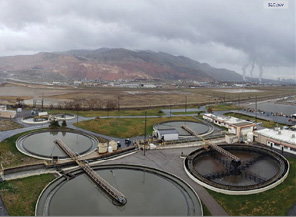
Infrastructure resilience has long been framed as a challenge most tractable for large, well-resourced municipalities. A new white paper aims to change that idea for the many smaller and mid-size communities that manage significant infrastructure with limited capacity.
“Built to Endure: A Smart Guide for U.S. Cities to Build Resilient Infrastructure that Lasts,” released by the American Society of Civil Engineers—in partnership with Duke University’s Nicholas Institute for Energy, Environment and Sustainability; Bentley Systems; AECOM; and Microsoft—argues that rapid advances in digital tools, modeling platforms, and data-sharing have made resilient infrastructure design more accessible and affordable than ever. The paper includes case studies where smaller communities have already put these approaches into practice.
“Technology is developing at such a rapid pace, and those new developments have made resilience far more accessible and affordable than ever,” the report’s authors note. The paper is available as a free download at iimag.link/GvRUm.
A National Roadmap to Close the U.S. Water Access Gap
More than two million Americans—and by some estimates as many as 9 million—still live without running water or a functioning toilet at home. A new sector-wide strategy aims to change that. The Vessel Collective released the National Roadmap to Close the U.S. Water Gap (iimag.link/JvInQ), described as the first unified strategy to achieve universal access to safe, running water and working sanitation in every American home by 2040.
The Roadmap, endorsed by more than 25 organizations such as Engineers Without Borders, IAPMO, the Rural Community Assistance Partnership and the US Water Alliance, identifies three mutually reinforcing pillars: visibility, funding and systems change. It names specific responsibilities for government at every level; the water, sanitation and hygiene (WASH) sector; philanthropy; and private industry, including near-, mid- and long-term milestones through 2040. Vessel and its partners convened more than 130 organizations in Washington, D.C., in May 2026 to put the plan into action. The Roadmap projects a 5x economic return on investment, framing access to water and sanitation not just as a humanitarian issue but as a core infrastructure imperative.
TOP Stories
The following are the top stories from the last few months (in terms of traffic) on the Informed Infrastructure website. This also reflects key coverage areas that are regularly refreshed online and via our weekly e-newsletter. Simply search key words on Informed Infrastructure online to find the full story.
Buildings
atNorth Announces 30MW Metro Data Center in Stockholm, Sweden
NIBS, MOD X Launch Initiative to Streamline Housing Approval Through System Certification
AISC, RCSC Release Design Guide on Structural Joints Using Stainless Steel Bolts
Transportation
Singapore, Long Beach and Los Angeles Ports Renew Green and Digital Shipping Corridor Agreement
Siemens and L.K. Comstock Digitalize Signaling Technology on NYC's Iconic Fulton-Liberty Lines
Water
New Design Guide for HDPE Water PIPE System in Seismic-Prone Areas
STV to Lead $29.4 Million Water System Upgrade in Central Texas
Study to Determine Most-Effective PFAS Treatments for High-Risk Homes
Tools and Technology

Todd Danielson
Todd Danielson has been in trade technology media for more than 20 years, now the editorial director for V1 Media and all of its publications: Informed Infrastructure, Earth Imaging Journal, Sensors & Systems and Asian Surveying & Mapping.
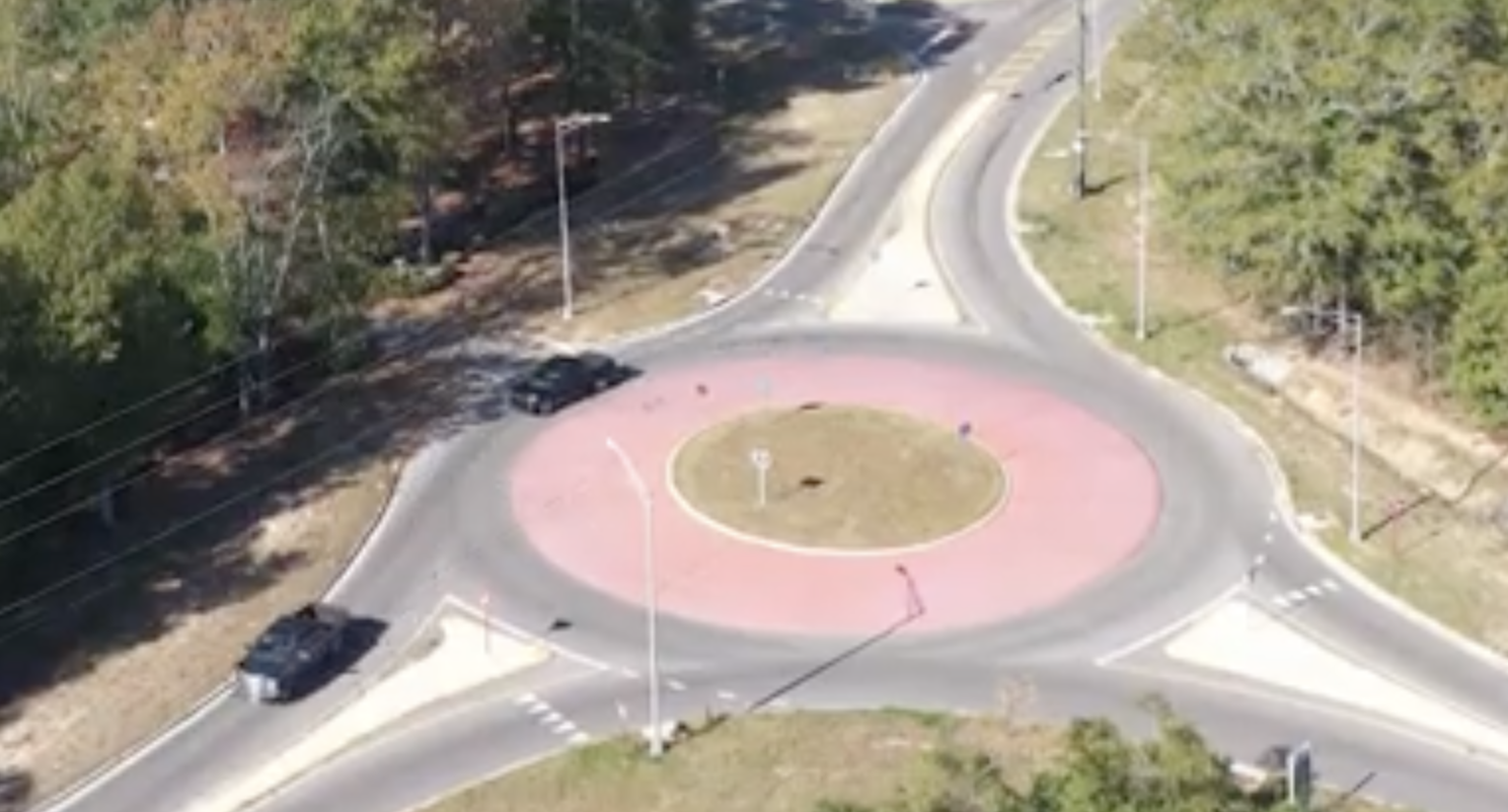
Video: New Roundabout Under Construction at McIver and Old Florence Roads in Darlington County
Bridge Replacement at Amsterdam Centraal Station
June Issue 2026
.jpg?width=225)