In this section, Informed Infrastructure compiles infographics from trusted sources that reveal insight on infrastructure spending. We also compile some of the top infrastructure stories that shouldn’t be missed. For ongoing news coverage, turn to Informed Infrastructure online (https://www.informedinfrastructure.com), our Twitter feed (@IInfrastructure) and our weekly e-newsletter.
Green Building Momentum Is Slowing, Especially in the Americas
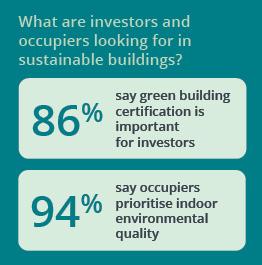
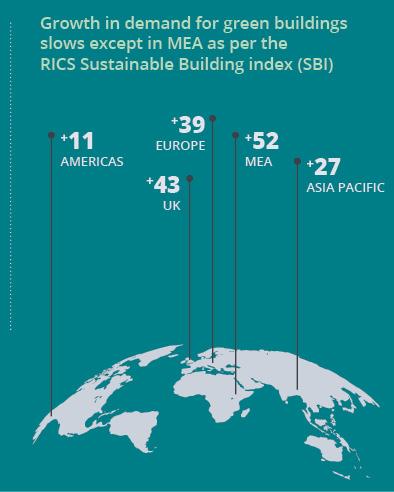
RICS Sustainability Report 2025 Infographic — rics.org
Renewable Energy Set to Double by 2031
Global renewable energy installed capacity is forecast to reach 8.4TW by 2031—more than double the 4.1TW recorded in 2025—at a 13 percent compound annual growth rate, according to GlobalData’s “Renewable Energy: Strategic Intelligence” report (iimag.link/cQSOU). Solar PV surpassed wind as the largest source of renewable electricity in 2025 for the first time, accounting for 56 percent of total installed capacity. Asia-Pacific dominates deployment, while the United States enters what analysts call a “two-speed” expansion as federal policy shifts toward fossil fuels.
Complementing that trajectory, green hydrogen is poised to command 88.6 percent of global low-carbon hydrogen production by 2030—up sharply from just 14.9 percent in 2024—as capacity additions accelerate across the Americas, per GlobalData’s “Low-Carbon Hydrogen Market Report” (iimag.link/QRmDr). Blue hydrogen, which held a 76.3 percent share in 2024, is projected to fall to just 11.3 percent by decade’s end. Scaling production and cost reduction remain critical hurdles.
NERC: Half of North America Faces Elevated Grid Reliability Risk
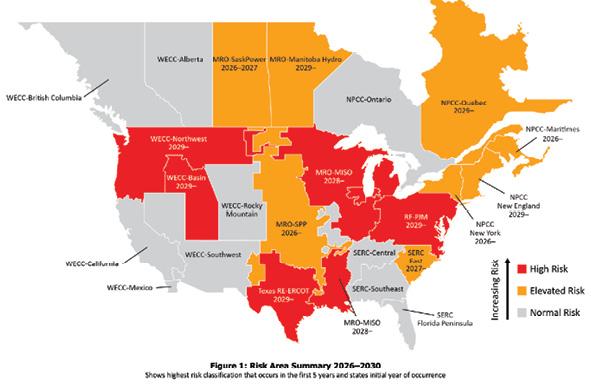
Thirteen of 23 assessment areas face resource adequacy challenges during the next five years, with five regions at high risk of supply shortfalls as early as 2026, according to the nonprofit North American Electric Reliability Corporation (NERC) “2025 Long-Term Reliability Assessment.” Summer peak demand projections surged 69 percent compared to the prior year’s forecast—largely driven by data centers and AI workloads. NERC urges flexible retirement schedules, faster transmission development and ensuring gas infrastructure can support peak reliability needs.
New Design Guides Address Stainless Steel Connections and Seismic Pipe Design
Two new technical guides are expanding the toolkit for resilient infrastructure design. The American Institute of Steel Construction and the Research Council on Structural Connections released “Design Guide 41, Structural Joints Using Stainless Steel Bolts,” covering how to specify, design, install and inspect stainless steel bolted connections, including connections between stainless and carbon steel elements. The guide is free to download for AISC members at aisc.org/dg.
Separately, the Plastics Pipe Institute’s Municipal Advisory Board (MAB) released “MAB-10 2025, Design of HDPE Water Mains for Crossing Seismic Hazard,” a 38-page guide covering required wall thickness for HDPE water mains at fault crossings, including formulas, calculations and pipeline response to strike-slip events. It partners with the previously published MAB-9 on lateral spread hazards. Both are free at plasticpipe.org/MABpubs.
Legacy Data Infrastructure Costing AI Era $108 Billion per Year
Poor data foundations contribute to an estimated $108 billion in wasted AI investment annually, with 58 percent of organizations in the United States and Canada unable to realize meaningful AI value, according to a January 2026 survey by Hitachi Vantara of more than 1,200 C-level and IT leaders. Some 84 percent say data infrastructure complexity is growing faster than they can manage. Companies with mature data estates report positive AI ROI at more than twice the rate of those on legacy platforms.
The $452 Billion Case for Water Infrastructure Investment
Replacing the nation’s deteriorating water mains carries an estimated price tag of $452 billion, and annual costs from failing infrastructure are projected to be seven times higher by 2039 without investment—while every dollar invested generates roughly $2.50 in economic output, according to the Veolia/NAWC white paper “Beyond 2050: The Economic Imperative of Water Infrastructure Investment” (March 2026). With a third of the water-sector workforce nearing retirement and 240,000 watermain breaks occurring annually, the report frames water investment as a strategic economic priority.
The full paper can be downloaded at iimag.link/xGNhP.
TOP Stories
The following are the top stories from the last few months (in terms of traffic) on the Informed Infrastructure website. This also reflects key coverage areas that are regularly refreshed online and via our weekly e-newsletter. Simply search key words on Informed Infrastructure online to find the full story.
Buildings
Tools and Technology

Todd Danielson
Todd Danielson has been in trade technology media for more than 20 years, now the editorial director for V1 Media and all of its publications: Informed Infrastructure, Earth Imaging Journal, Sensors & Systems and Asian Surveying & Mapping.
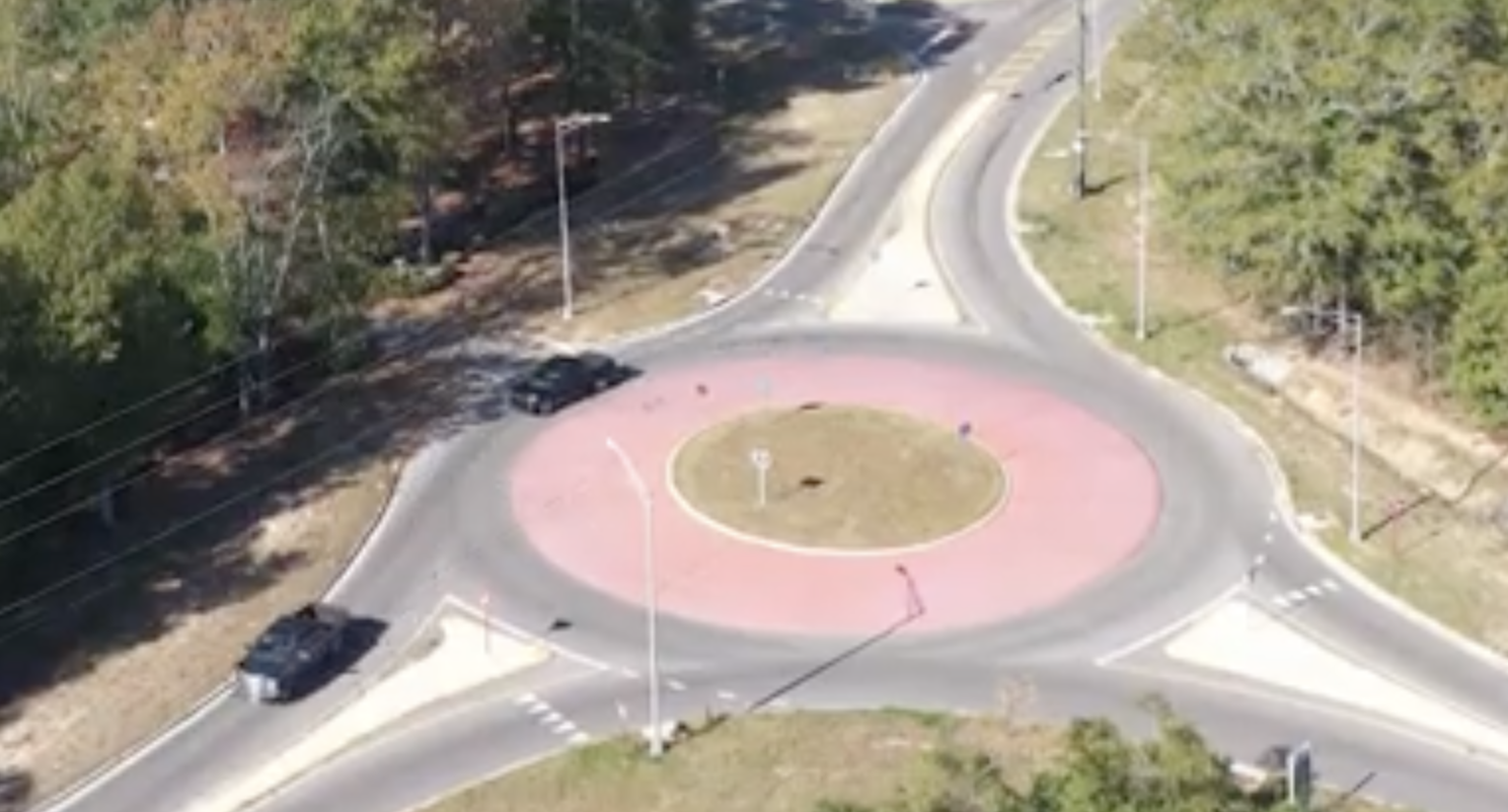
Video: New Roundabout Under Construction at McIver and Old Florence Roads in Darlington County
Bridge Replacement at Amsterdam Centraal Station
June Issue 2026
.jpg?width=225)