Many people think of traffic congestion much like the weather: something that can be predicted but not controlled. Yet, the first full year of congestion pricing in lower Manhattan demonstrated that gridlock isn't a force of nature but a manageable challenge when the right tools and policies are applied.
Mobility Matters
Congestion is the predictable result of many factors, ranging from road design and carpool culture to the availability, efficiency, price and safety of mass transit. City and regional planners can meaningfully influence many of these elements—and should.
Our economy relies on the efficient movement of people and goods, yet the “2025 Urban Mobility Report” from the Texas A&M Transportation Institute estimates the nationwide cost of congestion at $269 billion. Traffic from gasoline- and diesel-powered vehicles also increases air pollution, which, according to financial and medical sources, costs the country more than $450 billion each year, averaging about $2,500 per person in additional medical expenses and contributing an estimated 100,000 premature deaths annually in the United States.
We must do better.
While public transit and active mobility—such as walking and biking—are essential parts of the solution, we need more funds to invest in mass transit, safer streets and sidewalks, and other mobility improvements.
Congestion pricing is one solution that can help address all these challenges.
Measurable Improvement
A decade-old U.S. Federal Highway Administration report, “Lessons Learned From International Experience in Congestion Pricing,” found that congestion pricing zones in Stockholm, London and Singapore reduced traffic slowdowns by 10 percent to 30 percent. New York City’s Metropolitan Transportation Authority (MTA) estimated the program in Manhattan would reduce traffic by 10 percent while encouraging greater use of public transportation.
Just one year after implementation of congestion pricing, data reported by The New York Times show:
• Traffic within the Central Business District (CBD) is down by as much as 11 percent
• Speeds within the CBD have doubled compared to outside of it
• Commuters are experiencing 10 percent to 51 percent faster travel at bridge and tunnel chokepoints
• Approximately 73,000 fewer vehicles entering the CBD every day
• Transit ridership continues to rise as toll-generated funds are reinvested in transit infrastructure
Although some drivers no longer commute into the CBD because of the toll, as expected, negative impacts on local businesses haven’t materialized.
Congestion pricing is expected to generate about $900 million annually, which MTA could leverage to raise as much as $15 billion on the bond market. That would be a meaningful benefit for taxpayers and “straphangers” alike, but congestion pricing isn’t a panacea.
Other Paths to Better Mobility
Congestion pricing is just one tool in the box, and it’s time to dust off other tools as mobility patterns continue evolving post-pandemic.
U.S. cities should consider approaches that adjust traffic restrictions or toll rates based on the total volume of traffic, vehicle emissions ratings and vehicle occupancy (i.e., high-occupancy vehicle carpool lanes). We should explore incentives and behavioral-economics tactics that can further encourage people to use public transportation. These may include better access to commuter trains and buses; reliable timing that can be achieved through new strategies such “bus on shoulder” routes; and affordable or free rides, which are being piloted in cities across the country. Revenue from congestion pricing could support those efforts.
Courage to Innovate
Bold new strategies are needed to reduce the cost of congestion, improve urban mobility and generate funding to upgrade infrastructure. Our cities require new public policies, innovative infrastructure design, and digitally enabled implementation and enforcement. In all these areas, progress depends on a willingness to try new approaches.
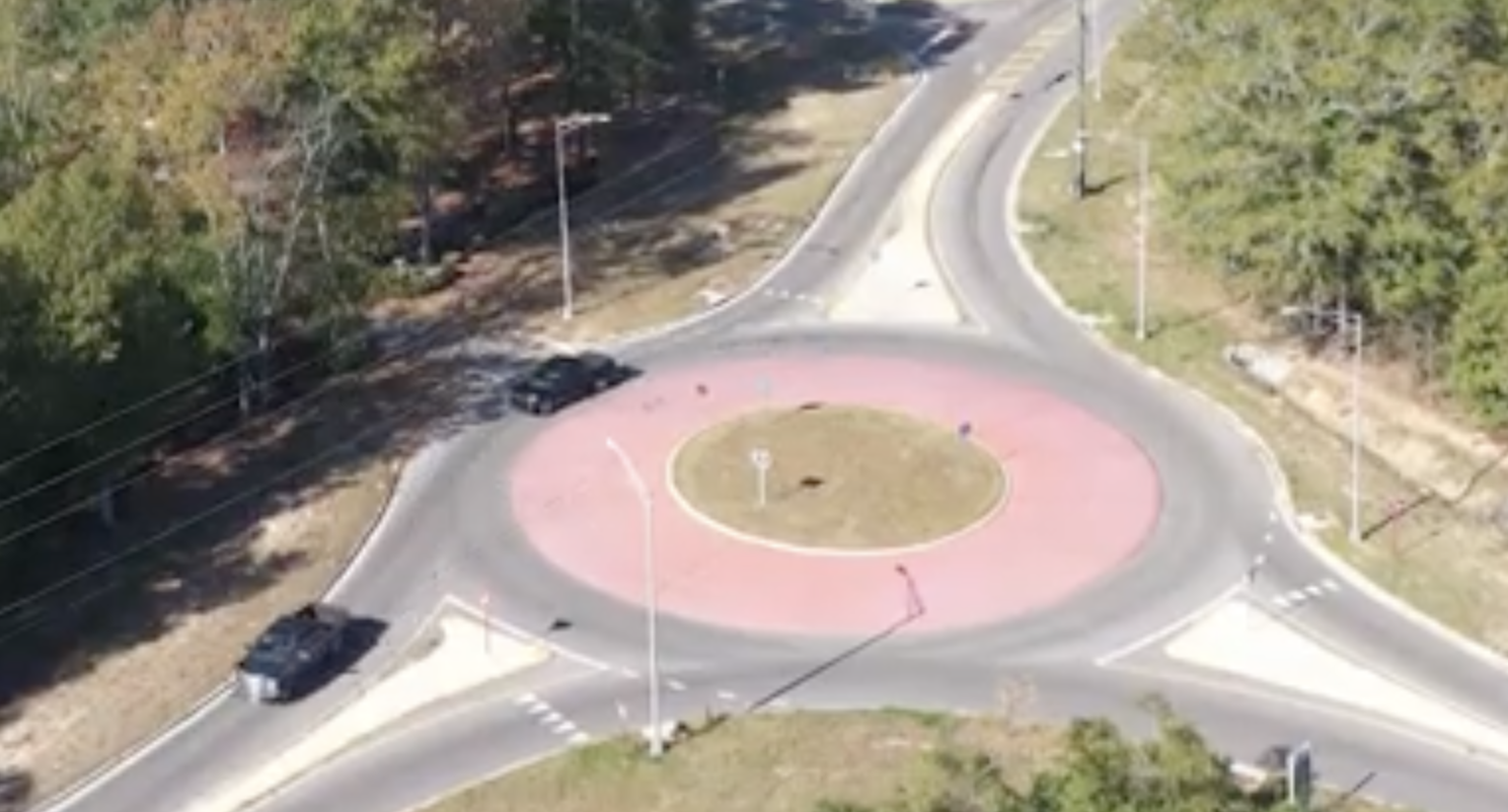
For example, traffic flow and accident reduction can improve through non-traditional intersections such as roundabouts and diverging diamond interchanges, which have been pioneered in places such as Florida to great acclaim.
To fund infrastructure upgrades, policymakers also should consider shifting from the gas tax to road-usage charging, which would require all motorists, including EV drivers, to pay based on miles driven rather than fuel consumed.
Regardless of where one stands on congestion pricing in New York City, experimenting with new approaches is essential to building large cities that are more prosperous, healthy and sustainable.
Editor’s Note: Paula Hammond will resume writing her Transportation Troubleshooting column in August 2026.

David Weiss
David Weiss, P.E., is national Transportation and Infrastructure business line executive, WSP in the U.S.; email: [email protected].
Video: New Roundabout Under Construction at McIver and Old Florence Roads in Darlington County
Bridge Replacement at Amsterdam Centraal Station
June Issue 2026
.jpg?width=225)