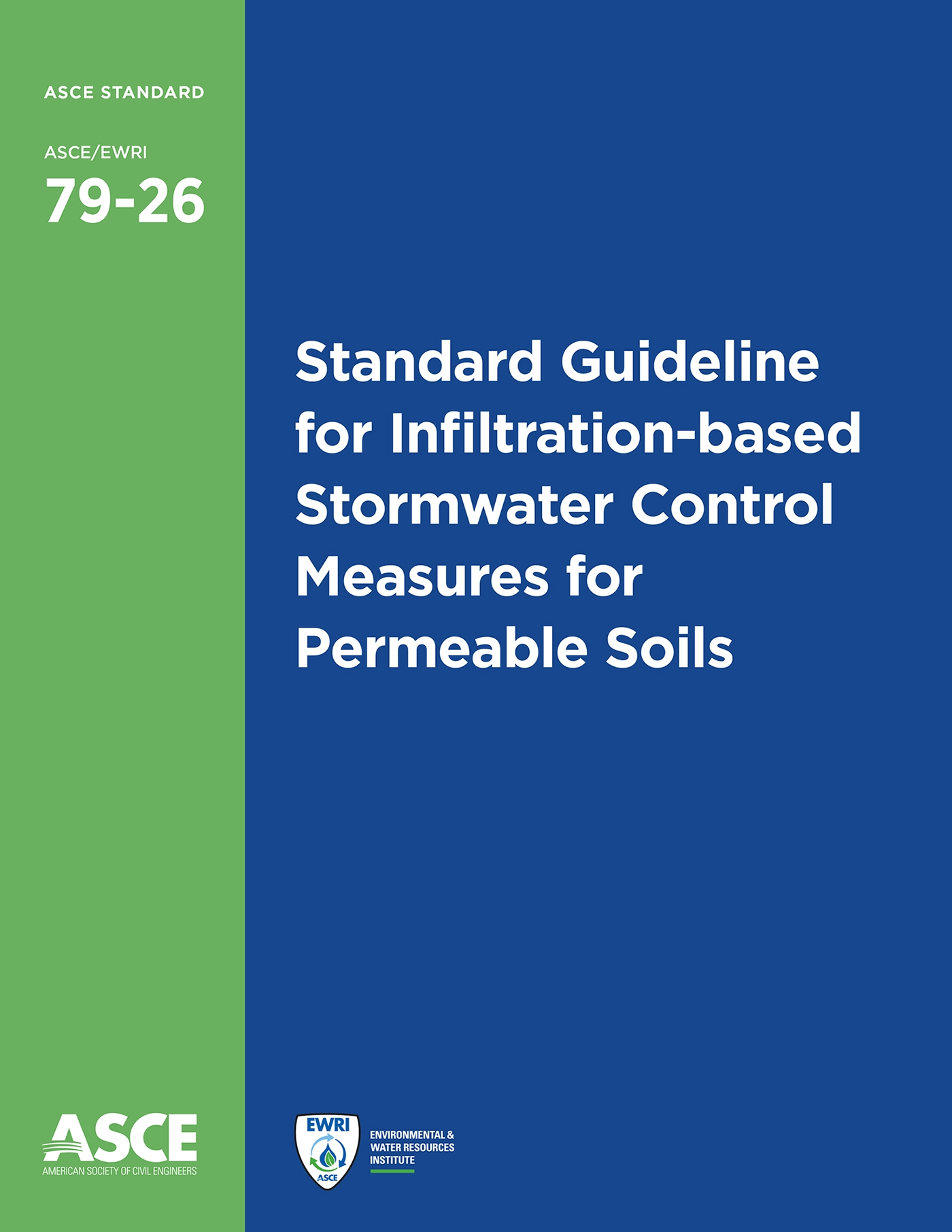
Reston, Va. –ASCE's newest standard, Standard Guideline for Infiltration-based Stormwater Control Measures for Permeable Soils, ASCE/EWRI 79-26, provides comprehensive guidance for the design, installation, operation, and maintenance of infiltration-based stormwater control measures (SCMs) for permeable soils. These structural practices capture urban stormwater runoff, promote infiltration into permeable soils, support groundwater recharge, and help remove or degrade pollutants within the unsaturated zone. As communities face increasing challenges related to stormwater management, water quality, and sustainable infrastructure, ASCE/EWRI 79-26 provides essential guidance for implementing effective infiltration-based solutions.
The standard outlines key design considerations critical to SCM performance, including soil properties, infiltration rate estimation, climatic influences, groundwater protection, and the selection of an appropriate design basis. It presents detailed methodologies for estimating system capacities and typical configurations for dry wells, vegetated swales, and infiltration trenches, along with approaches for evaluating performance and optimizing SCM sizing.
By improving the design and implementation of infiltration-based SCMs, this standard helps enhance stormwater management practices, protect groundwater resources, and improve water quality outcomes. ASCE/EWRI 79-26 serves as a vital resource for environmental engineers, stormwater professionals, and regulatory officials involved in sustainable infrastructure development and water resource protection.
To purchase online, visit the ASCE Library.
ABOUT THE AMERICAN SOCIETY OF CIVIL ENGINEERS
Founded in 1852, the American Society of Civil Engineers represents more than 150,000 civil engineers worldwide and is America's oldest national engineering society. ASCE works to raise awareness of the need to maintain and modernize the nation’s infrastructure using sustainable and resilient practices, advocates for increasing and optimizing investment in infrastructure, and improve engineering knowledge and competency.

Parul Dubey
Video: Habitat for Humanity - Women Build Event in Sacramento

AdventHealth Weaverville Hospital

June Issue 2026
.jpg?width=225)