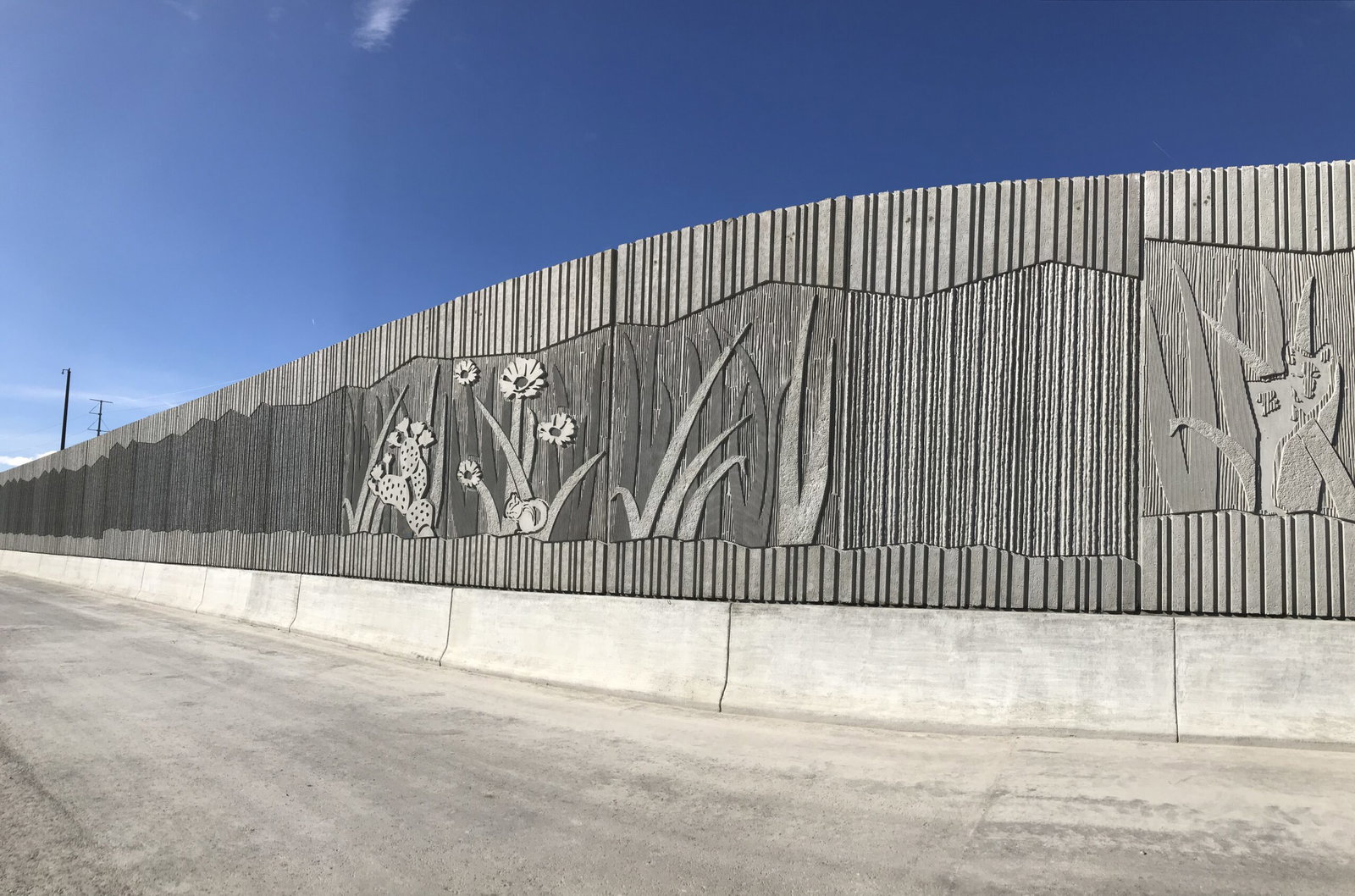
Highway expansions and urban development are necessary for a growing economy, but they bring a localized problem: traffic noise. To mitigate this, Departments of Transportation (DOTs) rely on highway sound barriers. However, while these massive concrete noise walls effectively block sound, they have historically created another issue — visual blight. Communities routinely push back against heavy infrastructure projects that threaten to box them in with miles of flat, grey, monolithic concrete. Today, DOTs and civil engineers are solving this problem through aesthetic infrastructure. By utilizing architectural concrete formliners, structural walls are transformed into massive public art installations, mimicking natural stone, brick, timber, or custom community motifs.
What Is Aesthetic Infrastructure?
Aesthetic infrastructure is the practice of designing public works, like retaining walls, bridges, and highway sound barriers, to harmonize with or elevate their surrounding environment.
Instead of building a wall and then applying a secondary decorative veneer (which is expensive and prone to failure), the aesthetic is built directly into the structure. Contractors use reusable urethane or single-use plastic concrete formliners placed inside the casting beds or forms. When the wet concrete is poured and cured, the liner is stripped away, revealing a deeply textured, monolithic surface.

Parul Dubey
Video: Habitat for Humanity - Women Build Event in Sacramento

AdventHealth Weaverville Hospital

June Issue 2026
.jpg?width=225)