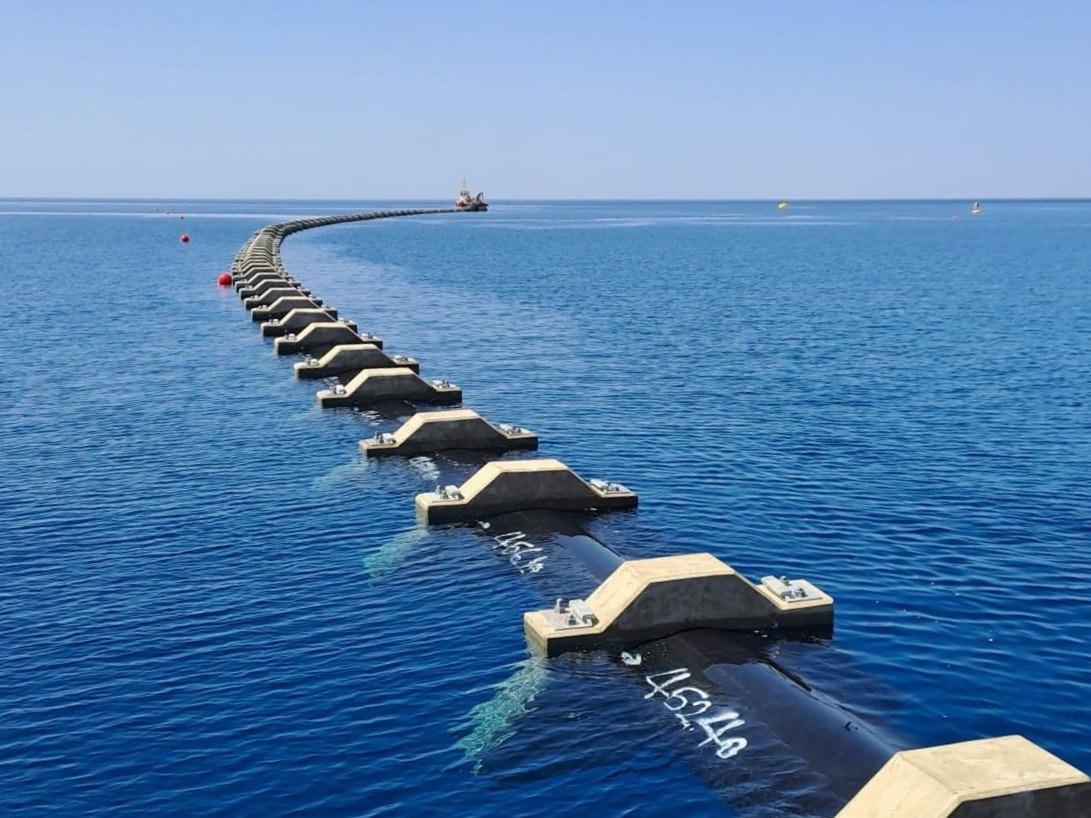
Popularity of HDPE Pipe Continues as Use Increases Due to Inherent Attributes for Salt and Fresh Water Projects
IRVING, Texas - The Marine Installations chapter of the Plastics Pipe Institute’s Handbook of Polyethylene Pipe has been updated to include more technical information and guidance for the use of high-density polyethylene (HDPE) pipe. Chapter 10 as well as the entire 600-page handbook is available at https://www.plasticpipe.org/PE-Handbook or by scanning the QR Code.

“This handbook has always been the keystone for anyone involved in water and wastewater systems,” stated Camille George Rubeiz, P.E., F. ASCE, co-chair, HDPE Municipal Advisory Board (MAB), and vice president for the Plastics Pipe Institute’s (PPI) Municipal & Industrial Division. “And we and our members continually revise and update it to keep the user up to date on the latest technical information and installation methods. Revising Chapter 10 is a wonderful example of PPI members volunteering their time and providing their expertise to benefit the industry.”
The MAB serves as an independent, non-commercial adviser to the Municipal & Industrial Division of PPI, the major North American trade association representing the plastic pipe industry.
“This revision significantly expands the technical depth and practical guidance for marine HDPE pipeline projects,” explained Alex LeBon, P.E., Marine Pipelines Division Manager for Makai Ocean Engineering (Hawaii). LeBon served as the primary author.
“Our group made several key additions to the chapter such as Survey & Shoreline: Typical survey requirements and shoreline crossing options; Viscoelasticity: Critical considerations during the installation phase; Ballast Weights: Expanded design guidance, including new examples; Bend Limits: Updated recommended limits for safer installations; plus, new visuals and photos that showcase real-world projects.
”Our goal was to provide clearer design guidance, practical field insight, and applied engineering experience to support safer and more reliable marine installations.”
PPI’s Rubeiz said that he plus PPI association members, Gerry Groen, Infra Pipe Solutions Ltd., Matt Haun, Performance Pipe and Greg Rocheleau, Makai, were part of the collaboration with LeBon.
“Polyethylene pipe is becoming increasingly popular with owners and contractors due to its long life, lower cost, an ease of installation,” LeBon stated. “For marine applications, polyethylene pipe is now the standard material of choice because of its resistance to corrosion, and its light weight and flexibility, which allows it to be installed using the float-and-sink method. This installation method is fast and requires a minimum amount of heavy equipment, resulting in significant costs savings. The flexibility and ductility of PE allow it to adapt to the varied conditions typically found in marine environment, including unconsolidated river and sea bottoms, unsupported spans, and forces resulting from strong currents and waves. Chapter 10 of the handbook discusses all the major items that a marine PE pipe designer should consider, and provides the necessary recommendations and formulas.”
More information can be found at www: plasticpipe.org/mabpubs
About PPI:
The Plastics Pipe Institute, Inc. (PPI) is the major North American trade association representing the plastic pipe industry and is dedicated to promoting plastic as the materials of choice for pipe and conduit applications. PPI is the premier technical, engineering and industry knowledge resource publishing data for use in the development and design of plastic pipe and conduit systems. Additionally, PPI collaborates with industry organizations that set standards for manufacturing practices and installation methods.

Parul Dubey
Video: Habitat for Humanity - Women Build Event in Sacramento

AdventHealth Weaverville Hospital

June Issue 2026
.jpg?width=225)