Toward Intelligent Infrastructure
The United Nations Human Settlements Program (UN-HABITAT) report discusses the strain this global demographic shift is placing upon current urban infrastructure. We are living in a world with a rapidly growing population and an urbanization rate that is increasing year over year. According to the United Nations Human Settlements Programme (UN-HABITAT), people living in urban areas will increase from 50% worldwide in 2011 to 75% in 2050. Over 2.5 billion people will move to urban areas in the...
Sensor Sensibility: Sensors Transform the Information Ecosystem
Welcome to the inaugural issue of Sensor Sensibility. This column will focus on a number of topics related to sensors ranging from sensor platforms to sensor data, standards to architectures. Sensors are transforming the information ecosystem, providing an opportunity for real-time data acquisition of ambient conditions. Historically, geographic information systems have provided the view into the “real world” – from land base data like roads and rivers, to aerial photography or remotely sense...
Informing Design
Geographic information systems (GIS) technology and design have long been intertwined, hard to separate, and competitive. Born from landscape architecture, GIS was seen as the place for mapping, planning, and analysis, while computer-aided design (CAD) was seen as a design tool for engineering and architecture. Those boundaries, ill-defined and arbitrary to begin with, are beginning to blur further with the introduction of geodesign. What is Geodesign? Geodesign is a combination of geograph...
Transgranular Perspiration is Not Sandy Sweat: New Discoveries in Ceramic Tiles at smartgeometry 2012
Since the early 2000s, the smartgeometry conferences have been held in venues as august and varied as San Francisco, London, Barcelona, and Copenhagen. At first glance, Troy, New York—this year's location—seems a little out of place in that lineup, but in fact smartgeometry 2012 was another spectacular event and Rensselaer Polytechnic Institute (RPI) proved to be the best possible host for this annual gathering of VSPs (Very Smart People) who are finding new ways to apply computational design to...
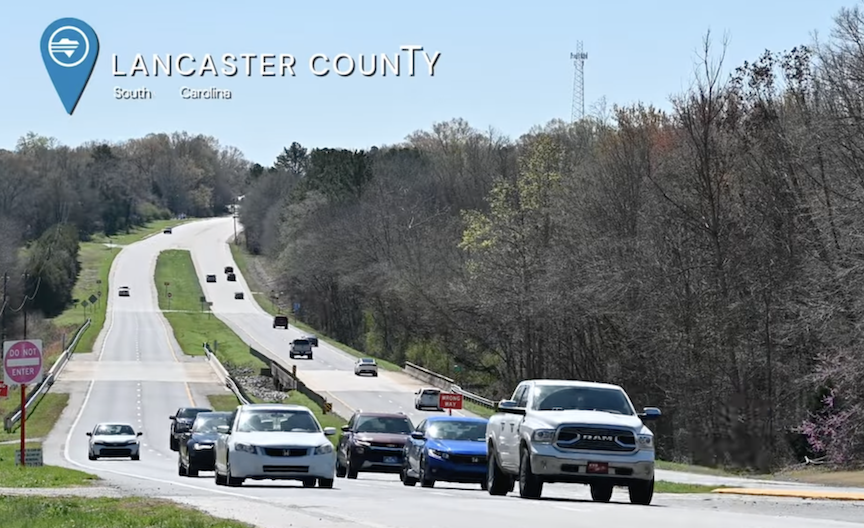
Video: Crashes Drop Measurably After Rural Road Safety Improvement Project on US 521 in Lancaster County
Barnstable Superior Courthouse

June Issue 2026
.jpg?width=225)